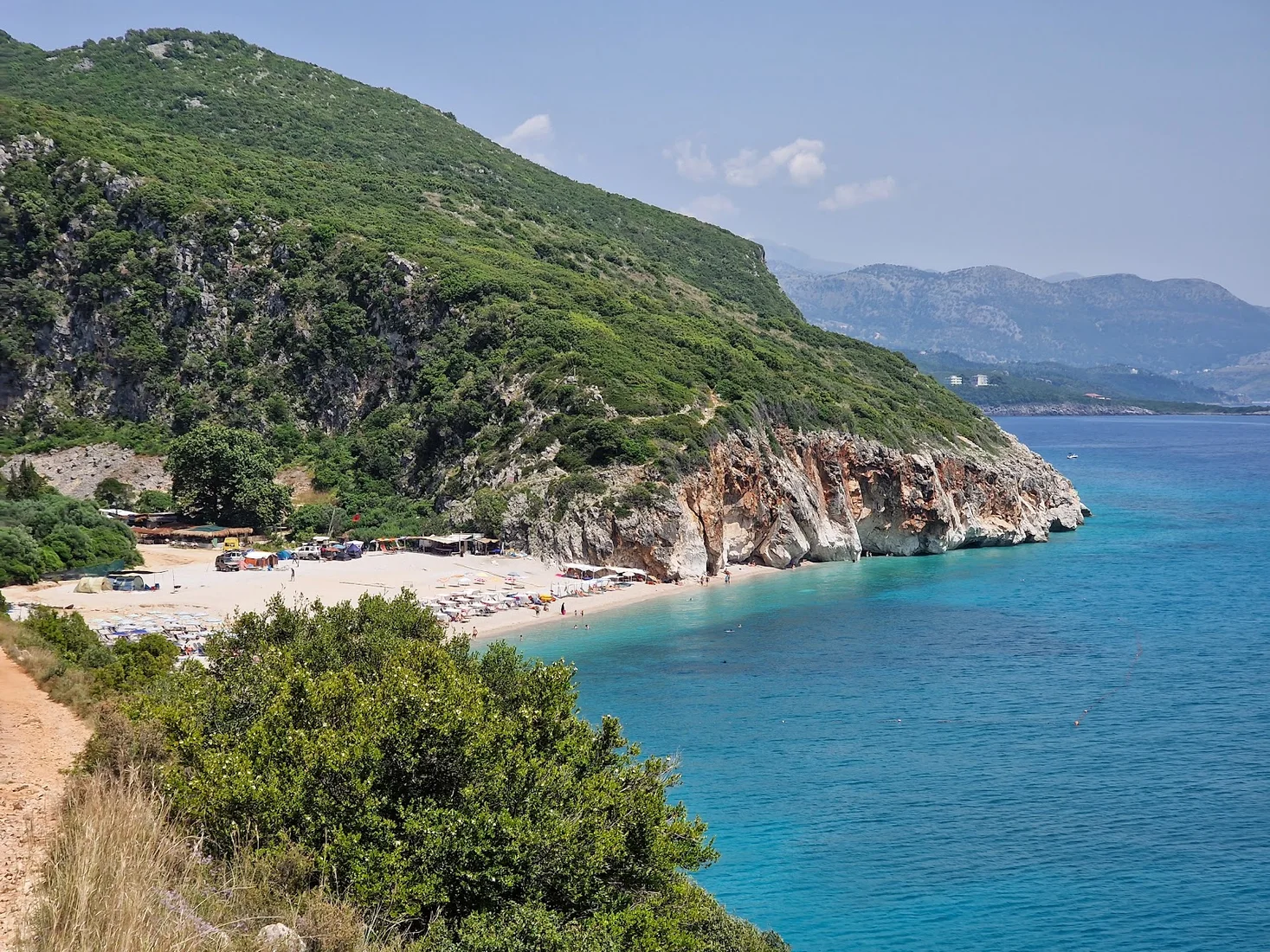
Gjipe Beach is the Albanian Riviera at its wildest. A hidden pebble-and-sand cove where a deep canyon opens onto the Ionian Sea, about 3 km south of Dhërmi. There's no road to the beach, which is exactly why it has stayed so unspoilt. Here's a complete guide to reaching it. The Gjipe Beach listing has the location and access at a glance. For the coast's other beaches, see our best beaches guide.
What makes Gjipe special
Gjipe sits where a deep canyon cut through the Ceraunian range meets the sea. The gorge and the pale cliffs framing the beach were carved by water over long ages, leaving a sheltered cove that stayed hard to reach and largely undeveloped. The draw is the setting: a curve of pebble and sand between high cliffs, exceptionally clear water for swimming and snorkelling, and the canyon behind the beach that you can walk up into. The Gjipe Canyon itself runs roughly 800 m inland, with limestone walls rising up to about 150 m on either side, and it has become one of Albania's best rock-climbing spots, a seaside crag of around seven sectors and 70-plus bolted routes (grades 4a–8b). It's also a favourite for wild camping and for boats stopping along the coast. That clarity is reason enough to pack a mask, our guide to snorkelling and diving around Dhërmi and Gjipe covers the best spots on this stretch and where organised diving actually runs from.
How to get there
There are two ways in, and no road reaches the beach:
- On foot, from the SH8 between Dhërmi and Vuno, watch for the signed turnoff for Gjipe / Shën Theodorit (St Theodore) Monastery, then follow a ~2 km unpaved road to a clifftop gravel car park (summer parking fee ~300–500 lek / €3–5). From there it's a 20–40 minute walk down the rocky canyon trail to the sand, but the climb back up is the taxing part: allow ~40–60 minutes in the heat, so keep water and energy in reserve for the return. The car park is as far as an ordinary car should go. The final track to the beach is really for 4x4s and quads (a regular rental can crawl it slowly in high summer, but the walk is the safe bet). The trailhead also serves the ruined St Theodore Monastery on the hilltop, a 14th-century foundation, later an army base, worth the short detour for the views. Go early to beat the midday sun on the exposed trail, and take water.
- By boat. The easiest way: small boats and water taxis run down the coast from Dhërmi or Himarë in summer, dropping you on the pebbles for a swim before the ride back. See our things to do for boat trips.
What to bring
Because Gjipe is undeveloped, facilities are minimal, so come prepared:
- Plenty of water and shade. There's little cover, and the walk in is exposed.
- Sturdy shoes for the canyon trail.
- Everything you need for the day, food, sunscreen, and anything for a swim or snorkel.
That said, it isn't quite off-grid in high summer: a small seasonal beach bar operates at the cove in July and August (expect a limited menu at holiday prices), and there's a simple eco-campground if you want to stay, rental or own tents (roughly €30–40 a night) with basic showers, alongside the free wild camping the cove is famous for. Outside the peak months, assume nothing is open and bring it all.
When to go
Gjipe is a summer spot, roughly June to September, when the water is warm and the boats run. Go early to have the cove quieter and to walk the trail before the heat builds; see our best-time-to-visit guide. Pair it with the coast's other beaches and coves for a classic Riviera day, and check our practical info before you set off.
Frequently Asked Questions
How do you get to Gjipe Beach?
No road reaches the beach. Walk in down the canyon trail, roughly 20–40 minutes (about 2.5 km) from the parking area off the SH8, with a tougher 40–60 minute climb back up, or come by boat or water taxi from Dhërmi or Himarë in summer.
Is Gjipe Beach worth it?
Yes, if you want a wild, undeveloped cove with exceptionally clear water for swimming and snorkelling, framed by high cliffs and a canyon you can walk into. Come prepared, as facilities are minimal.
Can you camp at Gjipe Beach?
Yes. The sheltered cove is a well-known spot for wild camping, which is free and tolerated. There's also a simple eco-campground with rental or own-tent pitches (around €30–40 a night) and basic showers if you'd rather not rough it. Bring what you need, as facilities are limited.
Is there parking at Gjipe, and does it cost anything?
Yes. A clifftop gravel car park sits about 2.5 km above the beach, reached by a ~2 km unpaved road off the SH8 between Dhërmi and Vuno. In summer attendants charge roughly 300–500 lek (€3–5). Leave a normal car there and walk the 20–40 minutes down; the final track to the sand is best left to 4x4s and quads.
Is there anywhere to buy food or drink at Gjipe?
Only in peak season, a small beach bar operates at the cove in July and August, with a limited menu at holiday prices. Outside those months there's nothing, so bring all your own food and water.
Can you rock climb at Gjipe?
Yes. The limestone walls of the Gjipe Canyon are a developed sport-climbing crag right by the sea, with around seven sectors and 70-plus bolted routes from about grade 4a to 8b, single- and multi-pitch. The canyon runs roughly 800 m inland with walls up to about 150 m high, so it draws climbers as well as swimmers and campers. Bring your own gear and check anchors carefully. Some sectors (notably Mare) have corroded bolts and worn lower-offs, so it's not a place to rely on fixed hardware blindly.