
Practical Info
Everything you need to know before you go -- money, safety, connectivity, and local customs.
Money & Costs
Dhërmi offers excellent value on the Albanian Riviera. Eating, drinking, and getting around all cost noticeably less than in western Europe.
Currency
Lek (ALL)
Cards
In larger venues
ATMs
Larger towns
Tipping
Modest, optional
Albania is still largely a cash economy. The official currency is the Albanian lek (ALL), though euros are widely accepted along the Riviera. The lek has strengthened lately, at roughly €1 = 93–96 lek in 2026 (check the current rate). Cards work in many hotels and larger restaurants, but carry lek in cash for small tavernas, kiosks, markets and the furgons. ATMs are found in the larger towns and can run short in peak summer, so draw cash before you need it.
Tipping is appreciated but never obligatory. In tavernas and restaurants, round up or leave around 10% for good service; drop your coins in the jar at a café. Round up taxi fares, and at hotels reckon on roughly €1 a bag for the porter and €1 a day for housekeeping. Tip in cash. It rarely makes it onto the card.
Budget
€35–55
Hostel/guesthouse, street food, public transport, free sights.
Mid-range
€70–130
Hotel, taverna meals, the odd guided tour, plenty of coffee.
Luxury
€180+
Boutique hotel, fine dining, private tours, the coast in style.
Typical Prices
Indicative prices in euros, reviewed in 2026. The Riviera gets much pricier in peak July–August, when beachfront rates can approach Greek-island levels.
Essential Services
The emergency number 112 works from any phone, free of charge and even without a local SIM card.
| Service | Number |
|---|---|
| European emergency (all services) | 112 |
| Police | 129 |
| Ambulance | 127 |
| Fire service | 128 |
Dial 112 for any emergency -- police, ambulance, or fire. Operators typically speak English as well as Albanian.
Electricity
Albania runs on the standard European system, so most visitors from the continent need no adapter at all.
Plug Type
Sockets take the European two-round-pin plugs, types C and F. Travellers from the UK or US will need a simple adapter.
Voltage
The supply is 230V at 50Hz. Most modern phone and laptop chargers handle this automatically -- just check the label.
Charging on the Go
Cafes across the centre offer power sockets and free WiFi, making it easy to top up devices over a coffee between sights.
Communication
Staying connected in Dhërmi is easy, with strong coverage across the village and reliable WiFi almost everywhere.
WiFi
Most hotels, restaurants, and cafes offer free WiFi, and speeds in the village are good. Coverage is reliable across the centre and waterfront.
SIM Cards
Local providers, Vodafone Albania and One, sell prepaid tourist SIMs from shops in the larger towns and at Tirana airport. Bring your passport for registration.
For less hassle, use an eSIM, Saily is our top pick for Albania (instant QR activation on arrival, no shop visit, no passport hassle, transparent pricing).
Roaming
Albania is not in the EU, so the EU "roam like at home" allowance does not automatically apply, though under the EU–Western Balkans arrangement roaming costs have come down. Check your carrier's Albania rates before you travel, or grab a local SIM or eSIM to be safe.
Safety Tips
Dhërmi is a safe, welcoming village. These tips cover the practical details worth knowing before you arrive.
Tap Water
Stick to bottled water in Dhërmi. Along the Riviera the supply is limited and often tank-fed, so tap water is not recommended for drinking; bottled water is cheap and sold everywhere.
Sun Protection
UV is strong from June to September. Pack high-SPF sunscreen, a hat, and water, and avoid long stretches in the midday sun, especially along the open waterfront.
Staying Aware
Dhërmi is a safe, walkable village. As anywhere, keep an eye on your belongings in busy spots in peak season, and be road-aware on the coast road, which has no pavement in places.
Accommodation Tax
Albania charges a small municipal tourist tax on overnight stays, collected by your hotel or guesthouse and passed to the local council. It is usually not included in the price you booked online. Rates are set per municipality and run roughly 100–500 lek (about €1–5) per person per night as of 2026; coastal areas like the Himarë region sit toward the higher end, often a few hundred lek a night. Expect it to be added at checkout or asked for in cash.
Emergencies
The emergency number 112 works from any phone, free of charge and even without a SIM card, connecting you to police, ambulance, or fire services.
Seasonal Guide
When you visit shapes your experience. Here's what to expect through the year.
| Season | Months | Weather | Crowds | Prices | Notes |
|---|---|---|---|---|---|
| Peak Season | July - August | 30-35C, dry and hot | Busy | Highest | Hot and lively, with festivals and a buzzing waterfront. Midday heat is intense -- plan sightseeing for mornings and evenings. |
| Best Months | May - June, September - October | 20-28C, mostly sunny | Moderate | Lower | The ideal window for most visitors. Warm, comfortable days, fewer crowds, and pleasant evenings for dining out and strolling the seafront. |
| Off Season | November - April | 5-15C, rainy spells | Quiet | Lowest | Cooler and wetter, and very quiet. Many beach businesses close for the winter. Better for low prices and solitude than beach life, and a car is essential as services thin right out. |
Public Holidays & Closures
On public holidays most shops, banks, and offices close, and museum and monument hours are cut back or suspended. Check ahead before you plan a visit around one.
| When | Holiday |
|---|---|
| 1–2 January | New Year's Day |
| 14 March | Summer Day (Dita e Verës) |
| 22 March | Nowruz (Sultan Nevruz Day) |
| Movable (spring) | Catholic & Orthodox Easter |
| 1 May | May Day |
| Movable | Eid al-Fitr & Eid al-Adha (Bajram) |
| 5 September | Saint Teresa (Mother Teresa) Day |
| 28 November | Independence / Flag Day |
| 29 November | Liberation Day |
| 8 December | National Youth Day |
| 25 December | Christmas Day |
The widest closures fall around New Year, Easter and the two national days at the end of November, Independence Day (28 Nov) and Liberation Day (29 Nov), when banks, offices and many shops close. Dates for the movable feasts (Catholic and Orthodox Easter, and the two Bajram holidays) shift each year, so check ahead if you are travelling around one.
Useful Phrases
Albanian is the local language, and English is widely spoken along the coast. Still, a few words in Albanian are always appreciated.
| English | Albanian | Pronunciation |
|---|---|---|
| Hello | Përshëndetje | per-shen-DET-yeh |
| Good morning | Mirëmëngjes | meer-uh-MUN-gyes |
| Good evening | Mirëmbrëma | meer-uh-BRUH-ma |
| Thank you | Faleminderit | fah-leh-min-DEH-rit |
| Please / You're welcome | Ju lutem | yoo LOO-tem |
| Yes | Po | paw |
| No | Jo | yaw |
| Excuse me / sorry | Më falni | muh FAL-nee |
| How much is it? | Sa kushton? | sah koosh-TON |
| The bill, please | Llogarinë, ju lutem | llo-ga-REE-nuh yoo LOO-tem |
| Cheers! | Gëzuar | guh-ZOO-ar |
| Do you speak English? | Flisni anglisht? | FLEES-nee ahn-GLEESHT |
| Delicious! | Shumë e shijshme | SHOO-muh eh SHEE-shmeh |
Dhërmi travel tips, FAQ
Albania's currency is the Albanian lek (ALL), though euros are widely accepted along the Riviera. The lek has strengthened in recent years, trading at roughly €1 to 93–96 lek in 2026 (check the current rate). Cards are taken in many hotels and larger restaurants, but carry some lek in cash for small tavernas, kiosks and the furgons.
Not reliably. Along the Riviera the water supply is limited and often tank-fed, so bottled water is the safer choice for drinking. It is cheap and sold everywhere.
The emergency number 112 works from any phone, free of charge and even without a SIM card, connecting you to police, ambulance, or fire services.
The best months are May-June and September-October, when the weather is warm and comfortable, the crowds are thinner, and prices are lower than in the peak July-August period.
Yes, widely. English is commonly spoken in hotels, restaurants, shops and by younger people and anyone in tourism, so you can get by easily without any Albanian. Learning a few words like faleminderit (thank you) and ju lutem (please) is appreciated but not needed to have a smooth trip.
Practical guides
Getting from the airport, moving around the village, costs, safety, and what to bring home.
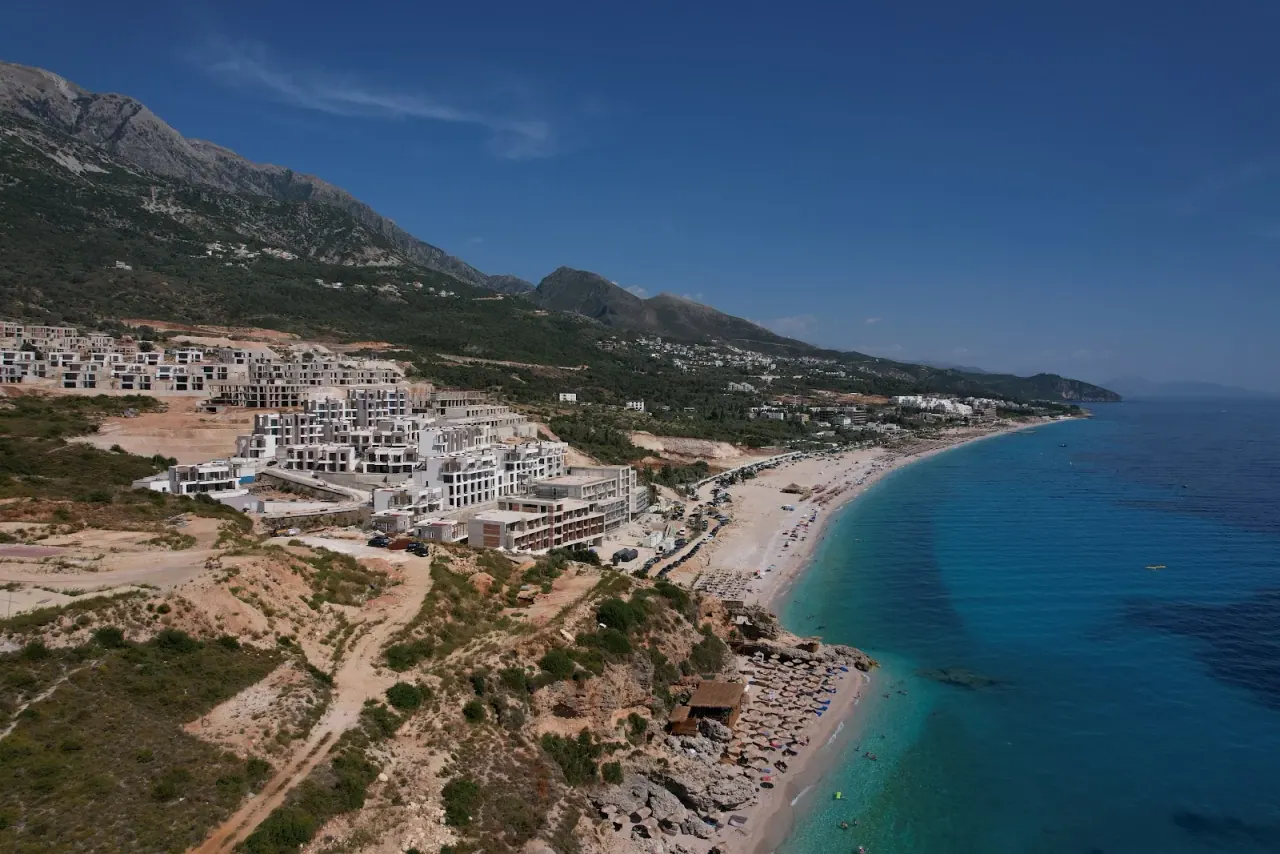
The Best Time to Visit Dhërmi, Albania: A Seasonal Guide
When to visit Dhërmi on the Albanian Riviera, why late spring and early autumn are the sweet spot, what peak summer is like, and how quiet winter gets.
5 min read
Getting to Dhërmi, Albania: The Llogara Pass Route
How to reach Dhërmi on the Albanian Riviera, driving from Tirana airport over the Llogara Pass, the SH8 coast road, and the Corfu ferry.
5 min read
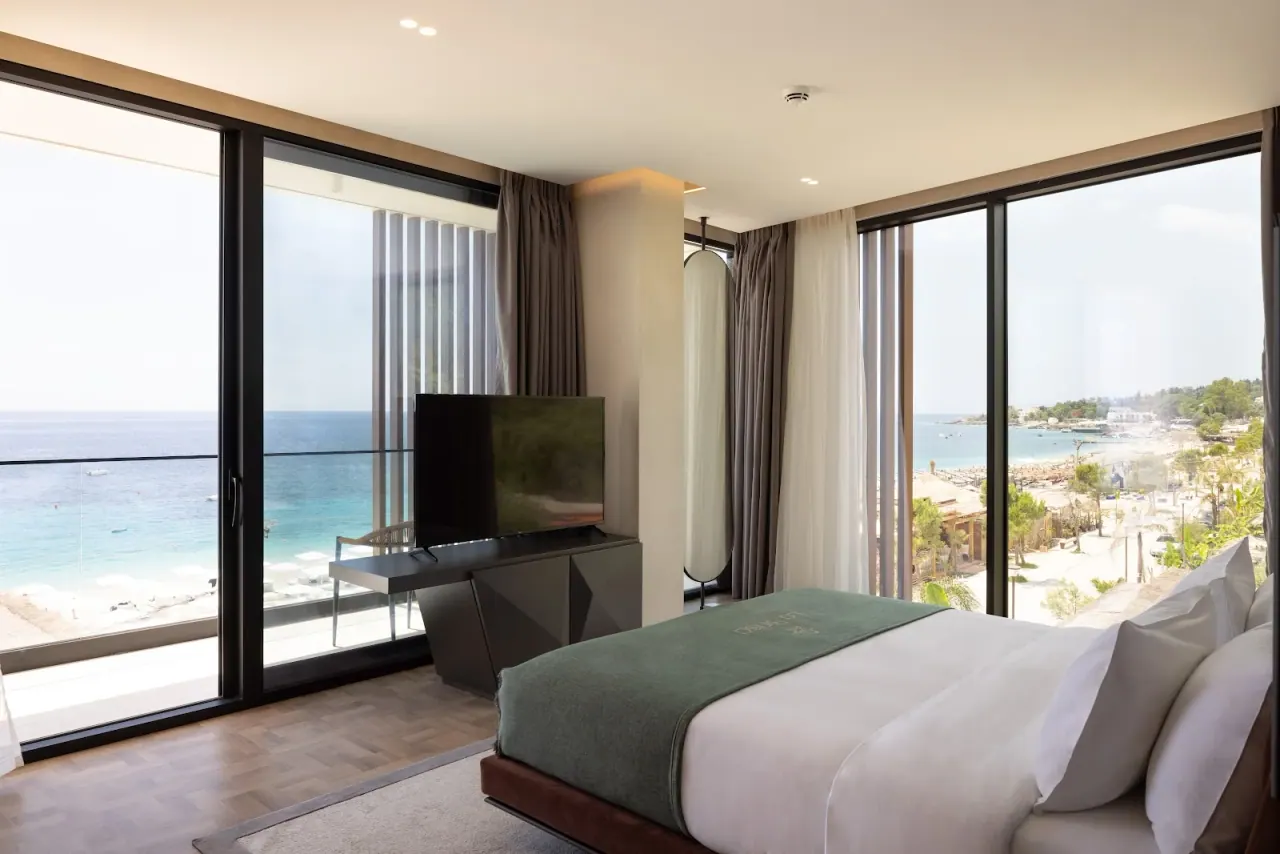
Where to Stay in Dhërmi: Beach Hotels & Guesthouses
Where to stay in Dhërmi on the Albanian Riviera, beachfront boutique hotels on the sand and friendly hillside guesthouses with sea views.
7 min read
The Best Day Trips from Dhërmi: The Riviera & Beyond
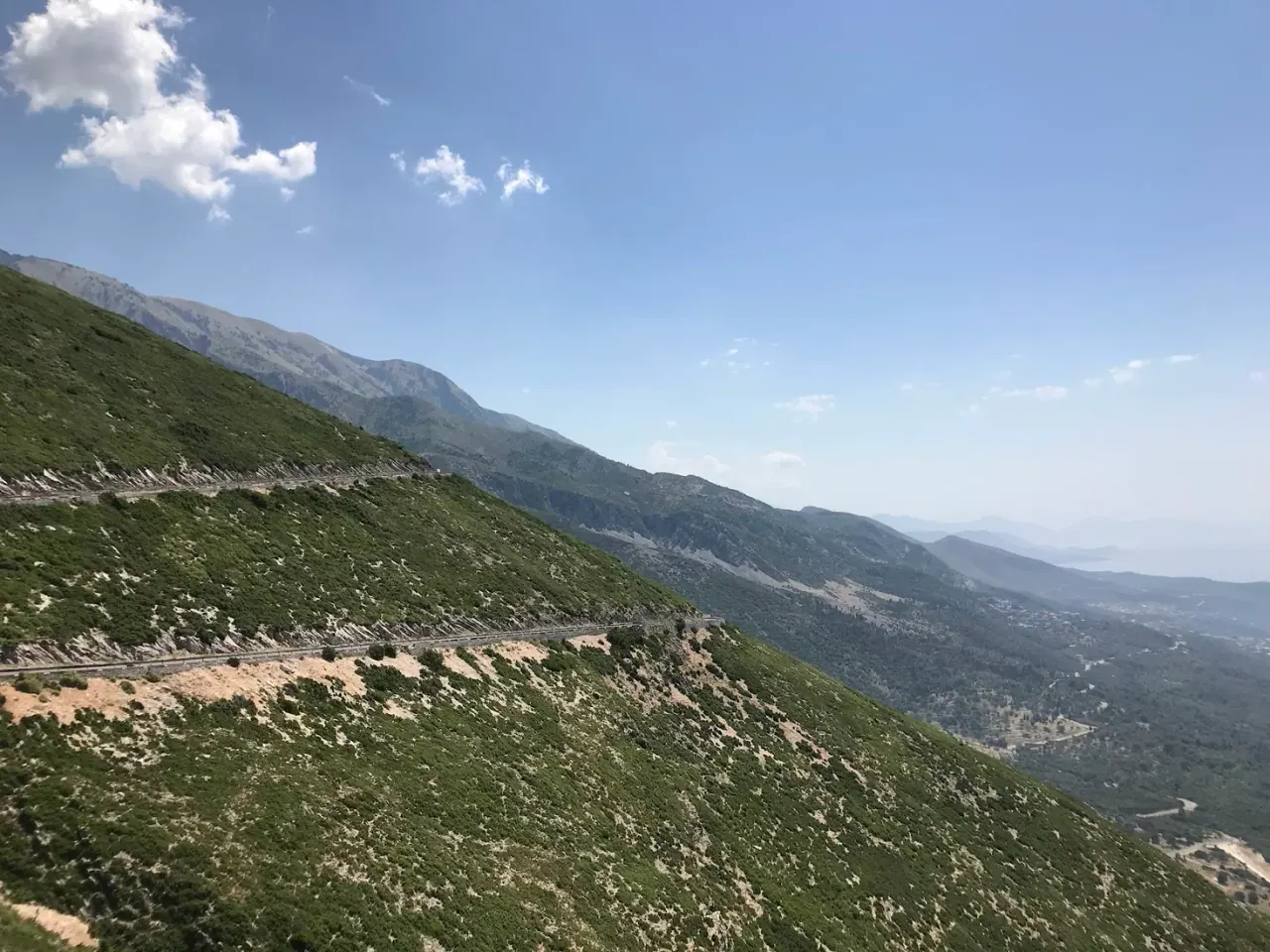
The best day trips from Dhërmi on the Albanian Riviera, the Llogara Pass, hidden Gjipe Beach, Himarë, Porto Palermo Castle, and ancient Butrint.
5 min read