Dhërmi sits where the Ceraunian Mountains drop almost straight into the Ionian Sea, and that dramatic meeting of rock and water gives the Albanian Riviera some of its finest beaches. The shore here is white limestone pebble and famously clear water. A different look from Albania's sandy north. Here are the best beaches within reach of the village, from the doorstep to the wild coves. For how to reach Dhërmi, see our getting-to-Dhërmi guide.
Dhërmi Beach: white pebbles below the mountains
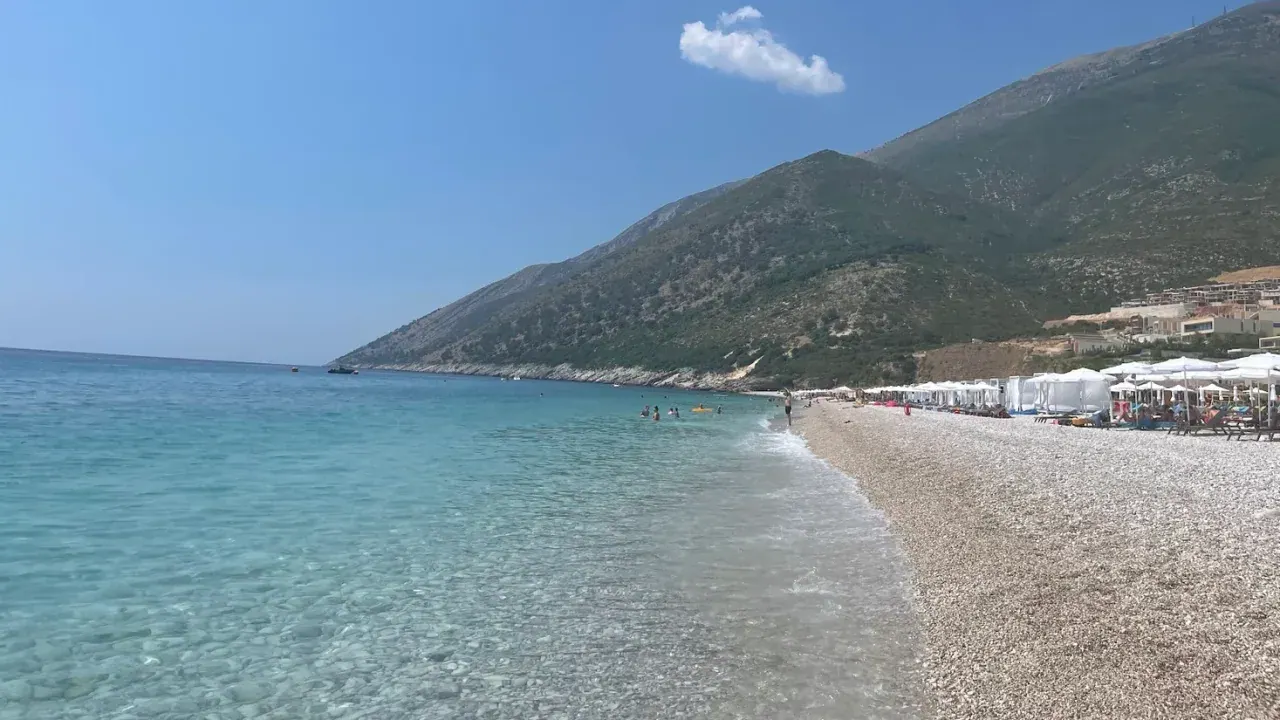
Dhërmi Beach is the main event, about 700 m from the village at the foot of the Ceraunian range. Its white pebbles and clear water come from the limestone coast, and it has grown into one of the Riviera's best-known summer destinations. Expect organised loungers, beach bars and swimming with the mountains rising straight behind you.
Drymades: the beach-club strip
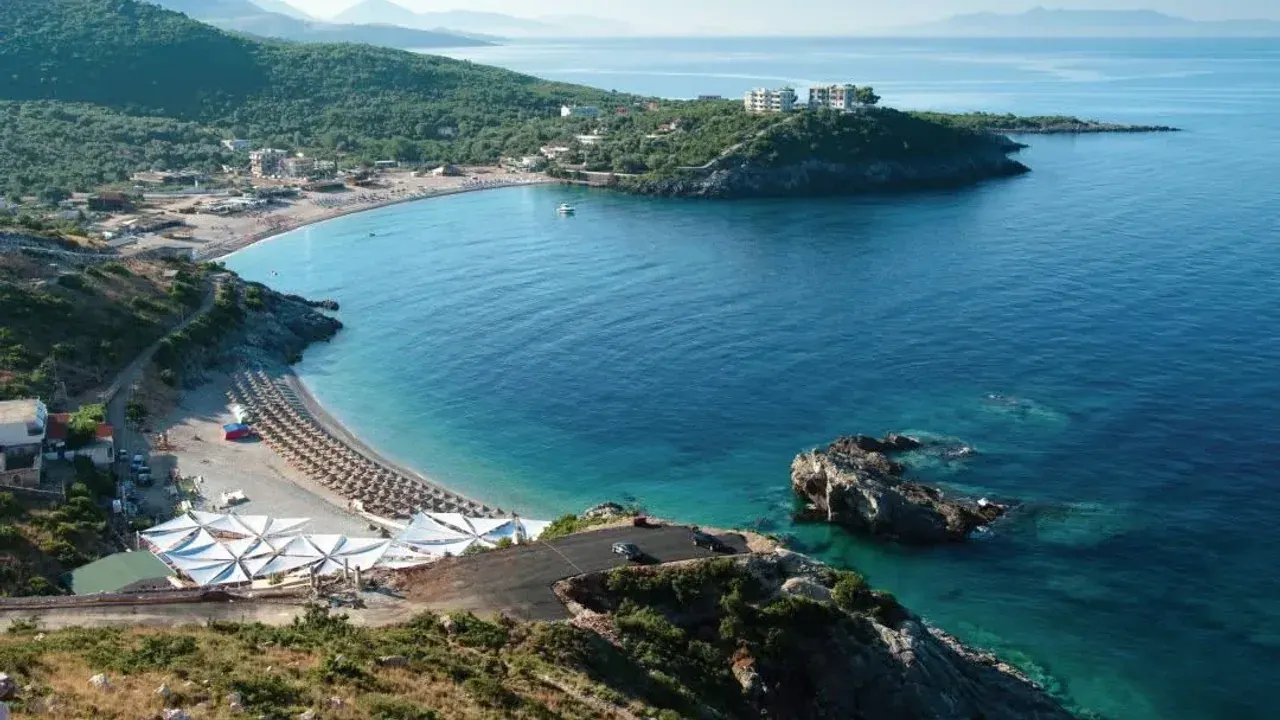
Just 3 km north is Drymades Beach (Drimades), the strip sharing the same white-pebble shoreline below Dhërmi. Long the low-key alternative to the busier main beach, it is now known for its relaxed beach clubs and, in peak summer, for electronic-music events. It's the choice for a longer, more laid-back day on the sand, or a lively one after dark.
Gjipe: the wild canyon cove
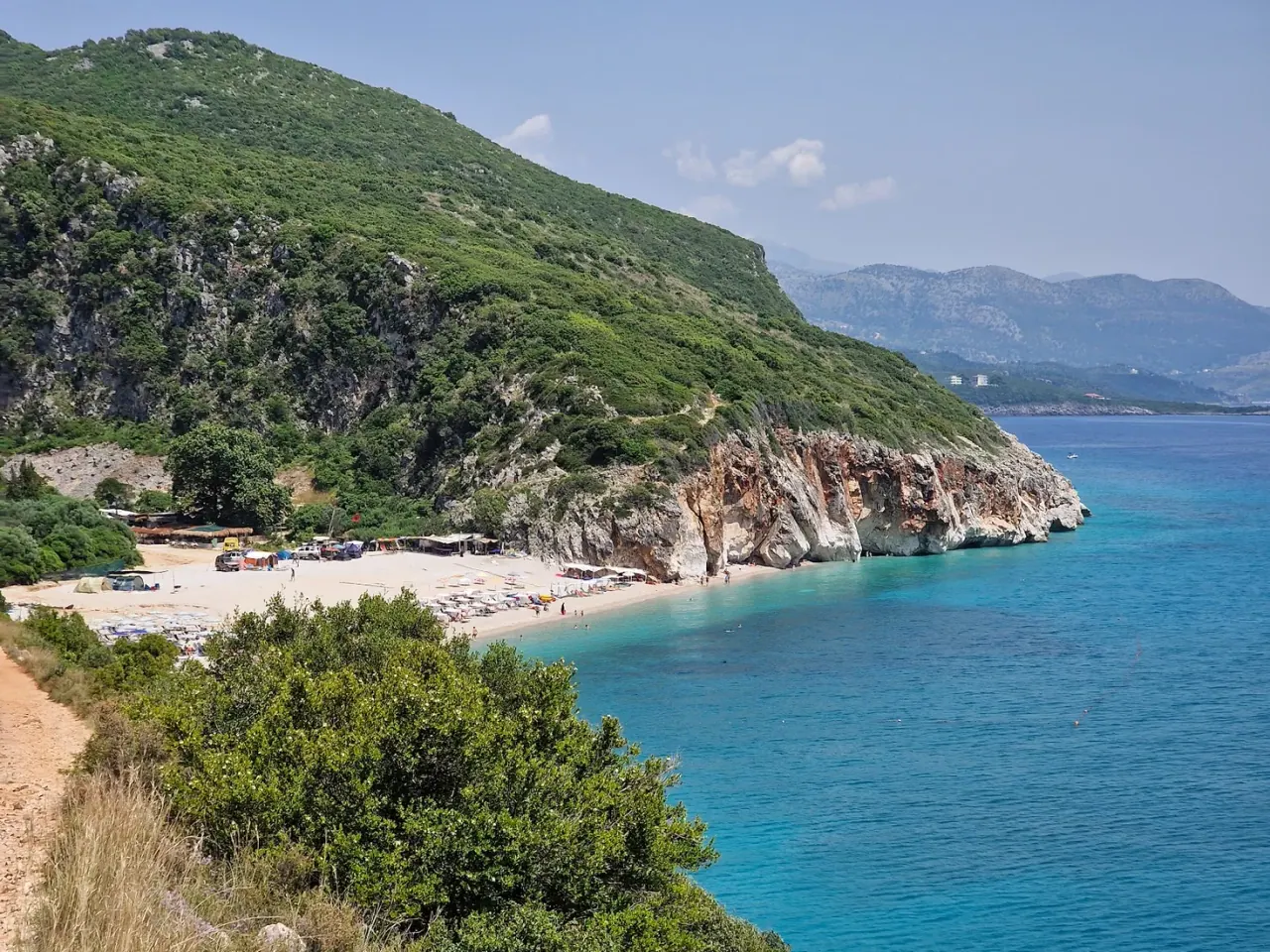
About 3 km south, Gjipe Beach sits where a deep canyon cut through the Ceraunian range opens onto the sea. The gorge and pale cliffs frame a sheltered, largely undeveloped cove that stayed hard to reach, today a favourite for campers, hikers and boat trips. You reach it on a walk down through the canyon or by boat from Dhërmi; go prepared, as facilities are minimal. It's the Riviera at its wildest.
Jale: the backpacker camping cove
About 10 km south toward Himarë, past the village of Vuno, Jale (Jala) Beach is a compact pebble-and-sand bay roughly 300–400 m long, tucked between two rocky headlands and backed by olive-covered slopes. It's the Riviera's backpacker and camping cove, home to established campgrounds and a string of summer beach bars, and, alongside Gjipe and Borsh, one of the coast's best beaches for a night under canvas. Reach it by the signed turnoff off the SH8 past Vuno, then a steep drive or a 20–30 minute walk down to the water.
Palasë: the broad bay to the north
Just north of Drymades, below the foot of the Llogara Pass, Palasë (Palasa) is a long, broad pebble bay, quieter and more spread-out than the main Dhërmi strip, and part of the newer Green Coast development. It carries a slice of history: this stretch of shore is widely identified with Palaeste, where Julius Caesar is said to have landed his army in 48 BC during the civil war against Pompey. A good choice for space and a calmer day on the sand.
Grama Bay: the remote cove by boat
Further up the wild coast toward the Karaburun peninsula, Grama Bay is one of the Riviera's most spectacular hidden coves, turquoise water beneath high cliffs, reachable only by boat from Dhërmi (often paired with the Blue Cave). Its rock walls are carved with inscriptions over 2,000 years old, left by ancient sailors and laborers sheltering here. A rare open-air gallery of antiquity you can swim right up to. It's a full day on the water, but the standout boat trip on this coast.
Pirates' Cave: by boat
Along the cliffs lies the Pirates' Cave, a sea cave hollowed from the limestone and traditionally linked with the pirates of this coast. It's visited on boat trips rather than reached by land, about 2 km by boat, and makes a natural add-on to a day out on the water. For organised boat tours and more to do, see our things to do, and our practical info for getting around and what to bring.
Beach-day basics
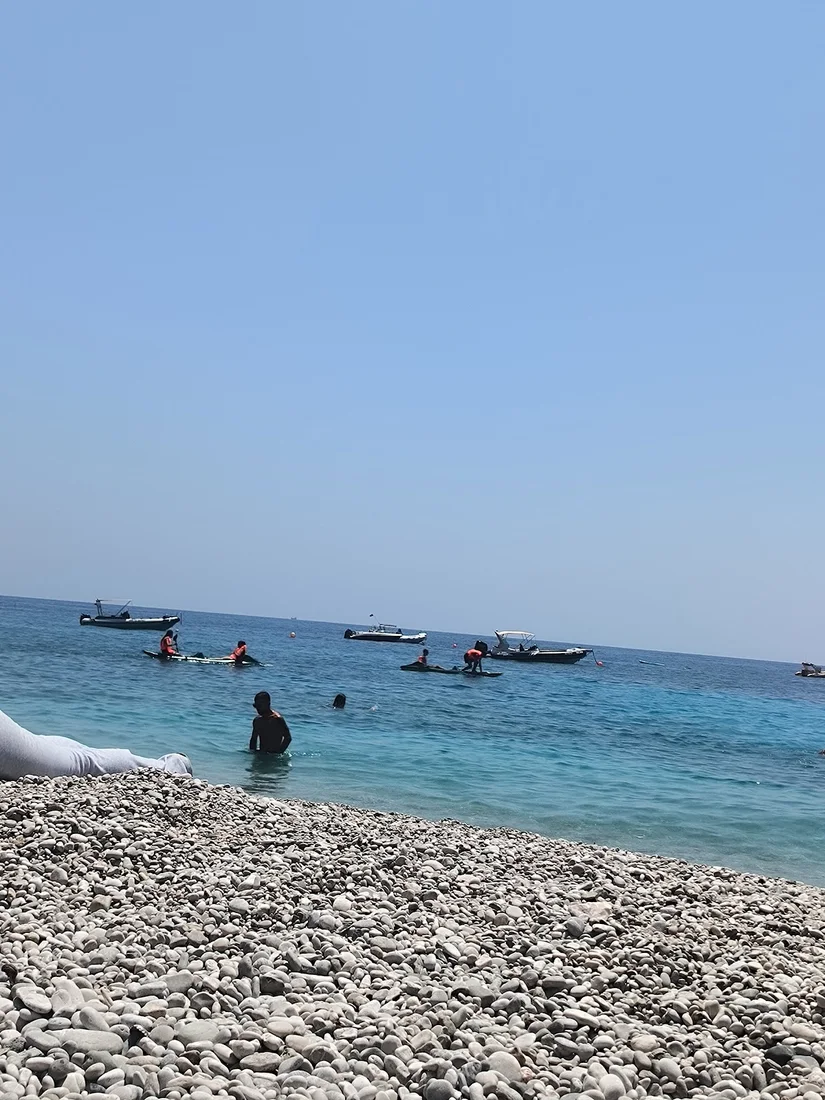
A few things make a Riviera beach day smoother. These are pebble beaches, so bring water shoes. The white stones are hard on bare feet and the entry can be sharp. Sunbeds and umbrellas are cash-in-lek and run roughly 1,500–3,000 lek (€15–30) a pair, more at the premium clubs. The trade-off for pebbles is exceptionally clear water, which makes the coast superb for snorkelling. The tiny Aquarium cove toward Himarë is a local favourite for it. In July and August the popular beaches fill by mid-morning, so come early for space and the calmest water. With children in tow, Dhërmi with kids sets out which of these beaches suit them and what parents should know about the pebbles and lifeguards.
Frequently Asked Questions
What are Dhërmi beaches like?
White limestone pebbles and famously clear water where the Ceraunian Mountains meet the Ionian Sea. A different look from Albania's sandy north. Bring water shoes for the pebbles.
How do you visit Grama Bay from Dhërmi?
Grama Bay, up the wild coast toward the Karaburun peninsula, is reachable only by boat, Dhërmi boat tours run there daily, usually combined with the Blue Cave and swimming stops. Its cliffs carry ancient inscriptions over 2,000 years old, and the water is superb for snorkelling. Budget a full day on the water.
What is the difference between Dhërmi and Drymades?
They share the same white-pebble shore. Drymades, about 3 km north, is the lower-key strip known for beach clubs and, in peak summer, electronic-music events.
How do you get to Gjipe Beach?
Gjipe is a hidden cove about 3 km south, at the mouth of a canyon. You reach it on foot down the gorge or by boat from Dhërmi; facilities are minimal, so bring water and shade.
Where can you camp near Dhërmi?
The best camping beaches near Dhërmi are the wild coves south of the village: Gjipe, at the mouth of its canyon, and Jale (Jala), about 10 km south past Vuno, which has established campgrounds among the olive trees. Both are pebble-and-sand bays with minimal facilities, so bring what you need, they're among the finest spots on the whole Riviera for a night under canvas, alongside Borsh further south.