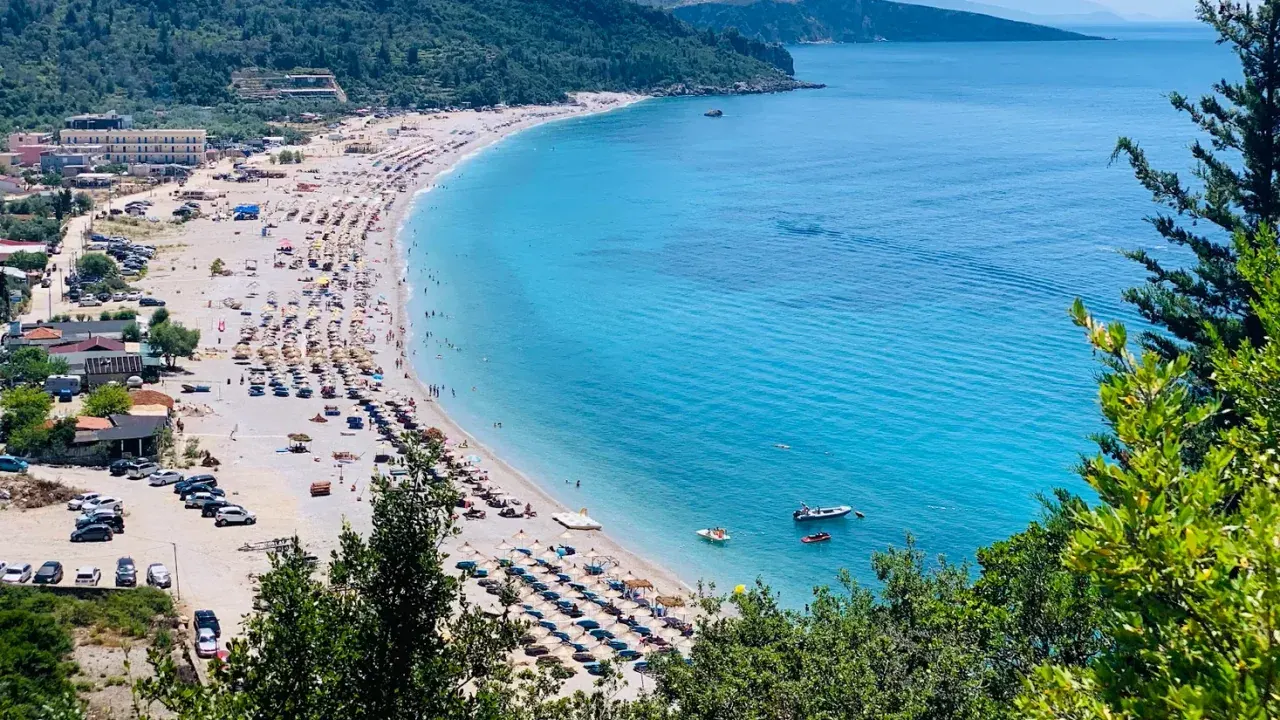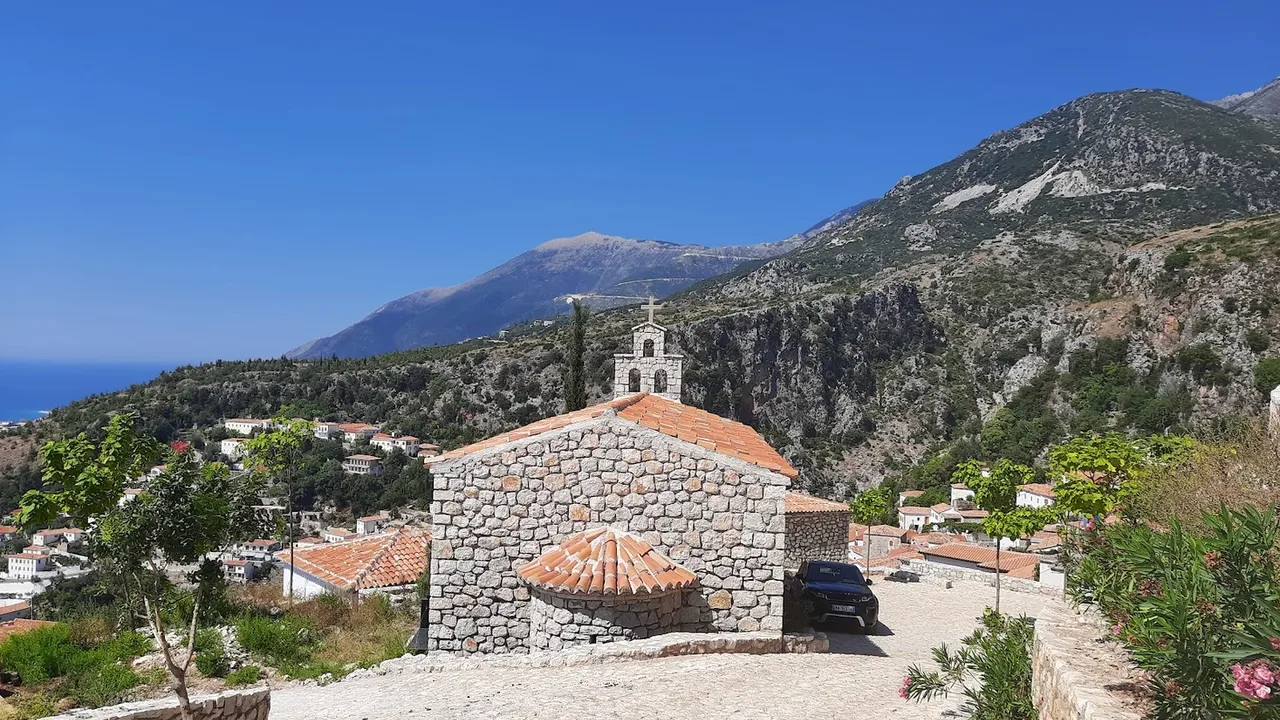
Almost everyone who comes to Dhërmi sees only the beach, but the village the beach is named after sits several hundred metres up the mountainside, an old cluster of stone houses and churches most day-trippers never climb to. This is Dhërmi's old village, the historic upper settlement, crowned by the small Byzantine-era St. Mary's Monastery (Manastiri i Shën Marisë), with frescoes inside and one of the best views on the Albanian Riviera from its terrace. A highlight of our best photo spots round-up. It is the half-day that turns a beach stop into an actual place, and here is how to make the most of it.
TL;DR: the old village at a glance
| Detail | The short answer |
|---|---|
| What it is | Dhërmi's historic upper village on the mountain slopes above the beach |
| Star sight | St. Mary's Monastery, small Byzantine-era church with old frescoes |
| Getting up | Steep walk or short drive up from the seafront |
| Entry | Free, it's a working place of worship |
| Time needed | Half a day, or a cool early-morning / late-afternoon hour |
| Best for | History, quiet, photographers and anyone tired of the sunbeds |
| Heritage | A long Orthodox Christian tradition and a historic Greek-speaking community |
For where this fits in a wider stay, see how many days in Dhërmi and is Dhërmi worth visiting.
Two Dhërmis: beach and village
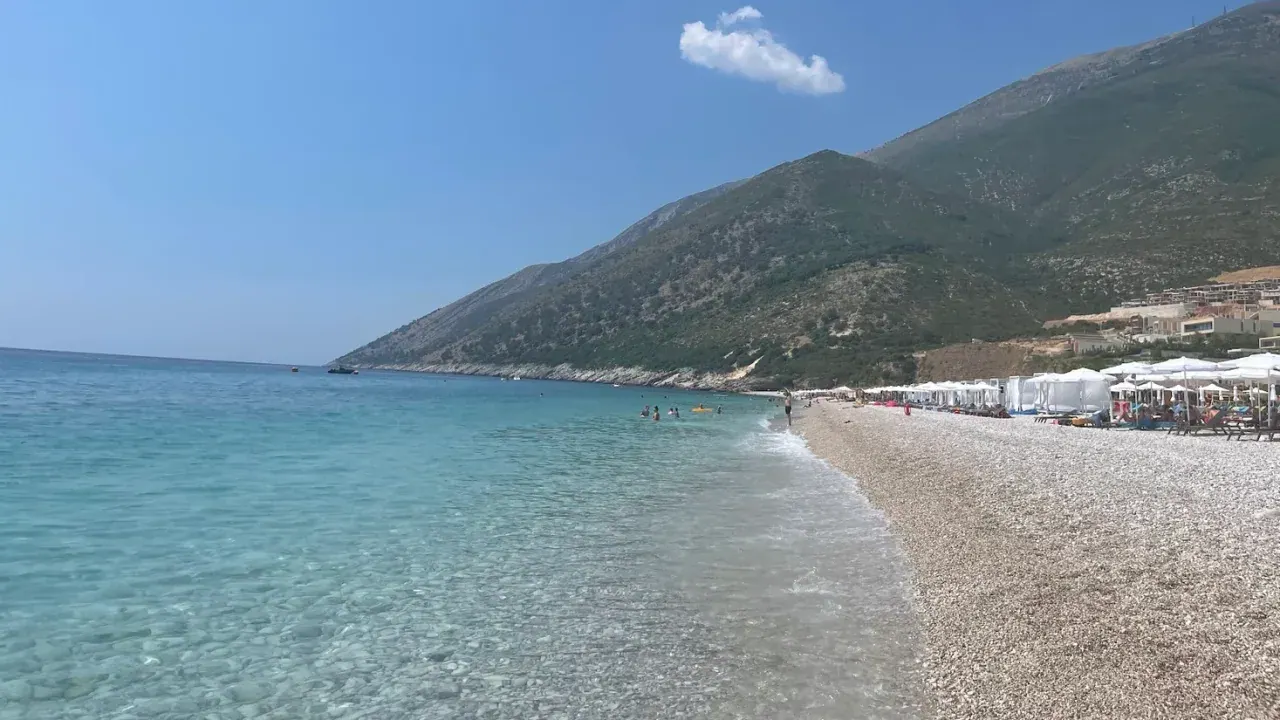
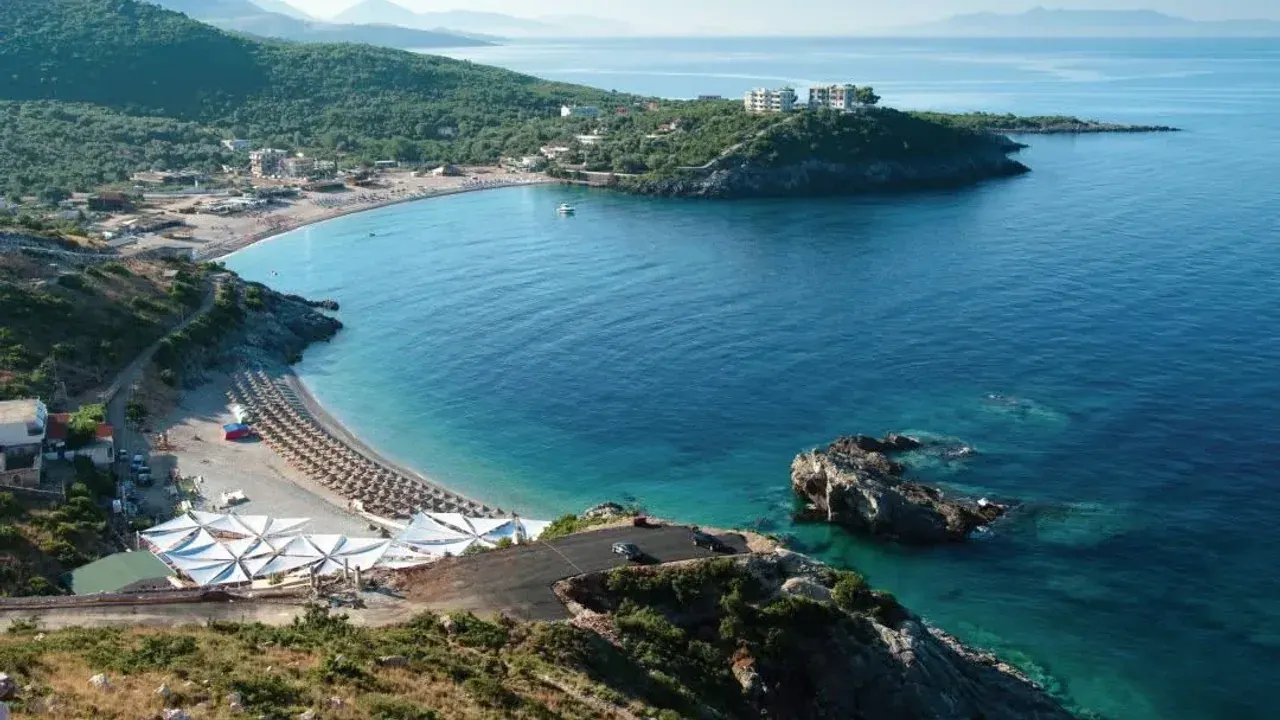
Dhërmi effectively splits in two. Down on the coast is the beach strip, sunbeds, clubs and tavernas along the white pebbles. Up the slope, reached by a twisting road and old footpaths, is the original village: narrow lanes, stone-and-tile houses, small churches and the everyday life the resort grew out of. The two sit a steep few hundred metres apart, and the climb between them is the difference between seeing Dhërmi and simply sunbathing at it. If your legs are done after the beaches, this is the more rewarding way to spend a cooler morning. See the best beaches near Dhërmi for the other half of the day.
St. Mary's Monastery
The old village's centrepiece is St. Mary's Monastery, a small Byzantine-era church thought to date to around the 13th–14th century, built of pale stone with a red-tiled roof and a little bell tower, a single-nave basilica crowned by a small Byzantine dome, standing inside a walled compound with a small cemetery on the hilltop northwest of the village. Inside, the walls carry frescoes and icons, some of the painting added in 1781 by Ioannis, the Orthodox Archbishop of Himara and Delvina, the kind of layered, centuries-deep interior that Albania's Riviera hides far more of than its beach reputation suggests.
It is a working place of worship and free to visit. The interior is sometimes open in the daytime but can be locked outside services, so treat getting inside as a bonus rather than a certainty. Even shut, the terrace and the view justify the walk: the old rooftops fall away below you, the beaches and turquoise water stretch out past them, and the Ceraunian Mountains rise behind. Dress modestly, shoulders and knees covered, and keep quiet if a service is underway. You'll find it listed among the village sights on our landmarks page.
A deep Orthodox heritage
Dhërmi and the wider Himarë coast hold a long Orthodox Christian tradition and a historic Greek-speaking community, and it shows in the hillsides: the slopes above and around the village are dotted with old churches and monastery chapels, of which St. Mary's is only the best known. Wandering the upper lanes you'll pass more of them, some tiny, some half-hidden, most simply part of village life rather than signposted attractions.
This heritage is part of what makes the old village worth the climb. It's a reminder that this was a settled, layered place long before it was a summer destination. For the fuller story of the village and its setting, see about Dhërmi.
Walking the upper village
The best way to take it in is slowly, on foot:
- From the beach, the climb up is steep but short, either drive up and park where you can, then walk the lanes, or make the ascent itself part of the outing.
- Wander the stone lanes between the old houses; many are restored, some still ruined, and the mix is the charm.
- Find the viewpoints where the alleys open toward the sea. The light is best early morning and late afternoon.
- Visit St. Mary's as the anchor, then let the smaller churches you pass fill out the walk.
Take water and go early or late in summer. The upper village is exposed and the midday heat on the climb is real. Sturdier shoes beat flip-flops on the rough stone.
Beyond St. Mary's: the other churches
St. Mary's is the anchor, but it's far from the only sacred building on these slopes. Dhërmi's Orthodox heritage left the old village and its hillsides dotted with small churches and monastery chapels, historically dozens of them, a striking density of religious architecture for so small a place, though many are now ruined or lost. Some are tucked into the upper village, others stand alone on the ridges and in the olive groves around it. Several are old stone-and-tile structures in the same Byzantine tradition, a few still hold faded wall paintings, and most are simply part of the landscape rather than signposted sights. You come across them as you wander. Chapels dedicated to saints dot the approaches to the village and the paths above it, and locals will point you toward the ones worth the short climb. You don't need a plan or a guide: pick a lane, follow it up, and let the churches reveal themselves. It's this density of quiet, centuries-old religious architecture, as much as any single building, that gives the upper village its atmosphere.
When to go up
Timing matters more here than on the beach. The upper village is exposed and steep, so the middle of a July afternoon is the worst slot, hot on the climb and flat in the light. Aim instead for the first cool hour after breakfast or the golden hour before sunset, when the stone glows and the sea below turns from turquoise to bronze. Photographers should favour late afternoon, when the light rakes across the rooftops toward the water.
Season shifts the experience too. In peak August the lanes are quiet even while the beach roars, most visitors never climb, so the old village is a genuine escape from the crowds down on the sand. In the shoulder months of June and September it's cooler still and arguably at its best. Whenever you come, there's no ticket window and no opening hour to catch: the village is simply there, lived in, ready to be walked.
Fitting it into your trip
The old village pairs naturally with a lazy beach day: climb in the cool morning, swim in the afternoon, or reverse it and come up for sunset over the coast. It asks for no ticket and no booking, which makes it an easy, free counterweight to the paid sunbeds below. Time it with the best time to visit Dhërmi, the shoulder months make the climb far more pleasant, and you have one of the Riviera's quietest, most atmospheric hours.
Frequently Asked Questions
Can you go inside St. Mary's Monastery in Dhërmi?
Sometimes. The church, with its old frescoes, is occasionally open in the daytime but can be locked outside services, as it's a working place of worship. Even when it's shut, the terrace and the sweeping view over the old village, the beaches and the mountains make the short climb worthwhile.
How old is St. Mary's Monastery?
The church is Byzantine-era, generally dated to around the 13th–14th century, with frescoes inside that were added over time. Some of the painting dates to 1781, the work of Ioannis, Archbishop of Himara and Delvina. It's built of pale stone with a red-tiled roof and a small bell tower, a single-nave basilica with a small Byzantine dome.
How do you get to Dhërmi's old village from the beach?
The old village sits several hundred metres up the mountainside above the seafront, reached by a steep, twisting road and old footpaths. You can drive up and park, or make the climb on foot. Go early or late in summer and carry water. The slope is exposed and hot at midday.
Is there an entry fee for the old village or the monastery?
No. Dhërmi's old village is simply a lived-in settlement you can walk through freely, and St. Mary's Monastery is a working church that charges no entry. The only costs are your own, good shoes, water and the time to climb up from the beaches below.
Is the old village worth visiting, or is it just the beach?
It's genuinely worth it. The upper village and its hillside churches show the layered Orthodox heritage the resort grew out of, and the views from St. Mary's terrace are among the best on the coast. It's the sight that turns Dhërmi from a beach into a place with history and depth.