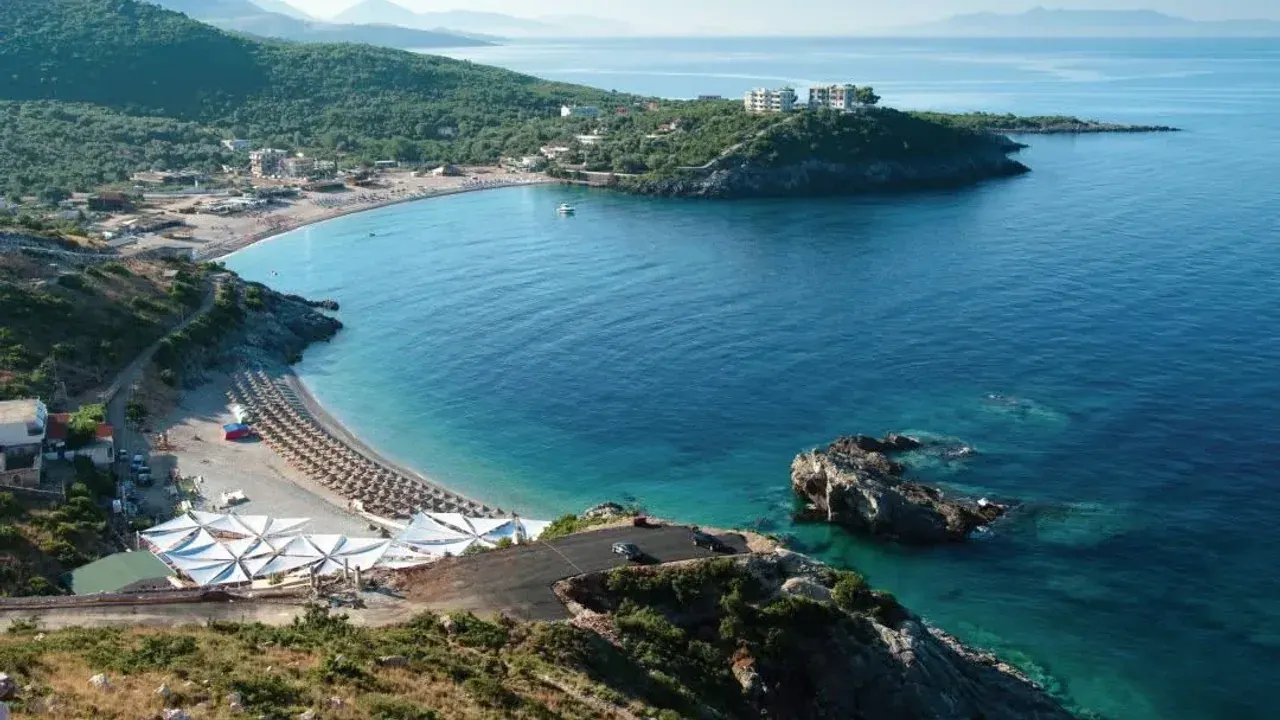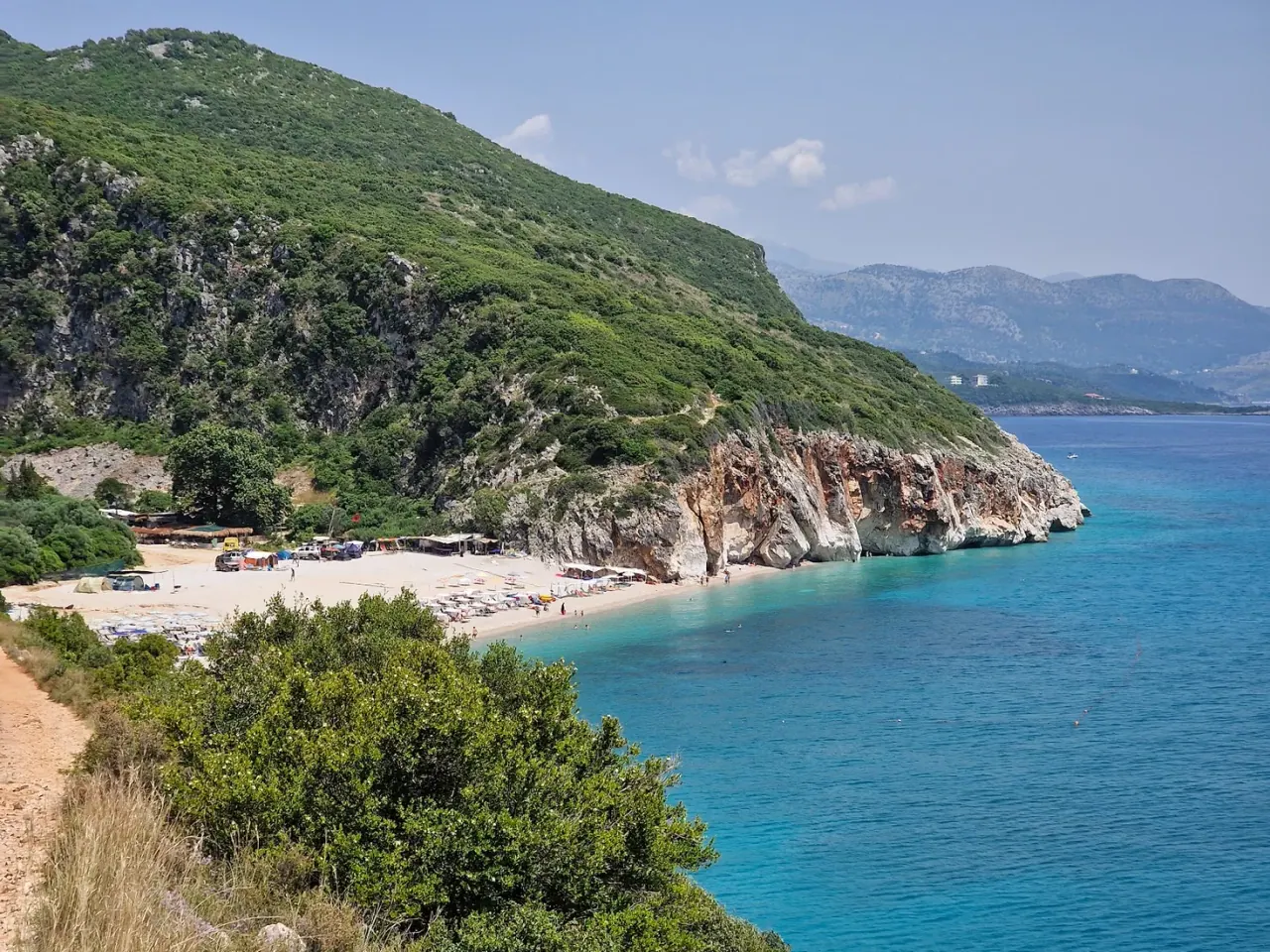
Palasa Beach (Palase) is the long, calm white-pebble beach just north of Dhërmi, the first stretch of coast you reach after the switchbacks down from the Llogara Pass, and the quietest of the big-name Riviera beaches near town. It trades Dhërmi's beach-club buzz for space, exceptionally clear water and a Blue Flag pedigree. Here's what makes Palasa worth the short hop, what it costs, and how to get there.
TL;DR: Palasa Beach
| Detail | The short answer |
|---|---|
| Where | ~2–3 km north of Dhërmi, first beach below the Llogara descent |
| The beach | ~1.5 km of white pebble, very clear turquoise water |
| Vibe | Calm and spacious, quieter than Dhërmi or Drymades |
| Claim to fame | Reported as Albania's first Blue Flag beach |
| Sunbeds | ~1,000–2,000 lek (€10–20) a pair; free stretches too |
| Getting there | Signed access road off the SH8; car or scooter easiest |
| Payment | Cash in lek |
Why choose Palasa over Dhërmi or Drymades
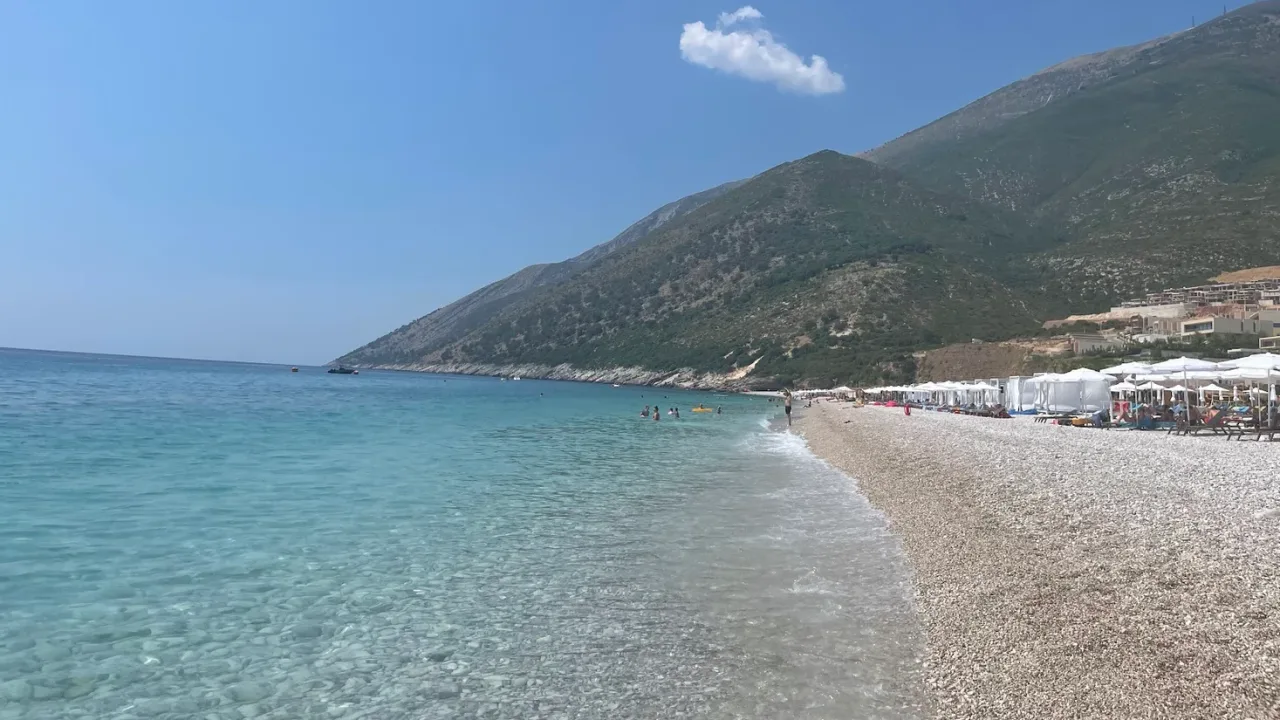
The three beaches share the same mountain backdrop and the same clear Ionian water, so what sets Palasa apart is space and quiet. Its roughly 1.5 km of white pebbles is long enough that it rarely feels crowded, even when Dhërmi and Drymades are busy, visitors regularly rate the water here as clean as, or cleaner than, anything they've swum in across the Ionian in Italy or Greece. The mountain-and-sea setting reportedly earned Palasa Albania's first Blue Flag certification, the international mark for water quality and beach management.
Palasa carries a surprising slice of antiquity, too. As ancient Palaeste, this is widely held to be the beach where Julius Caesar slipped his legions ashore in 48 BC during his war with Pompey, before marching them up over the Ceraunian mountains by the climb now remembered as the Pass of Caesar, so the quiet strand where you lay your towel has a genuinely Roman footnote.
If you want cocktails and DJ sets, stay at Dhërmi or Drymades. If you want to spread out, swim in glass-clear water and hear yourself think, Palasa is the pick. For the full comparison, see the best beaches near Dhërmi.
The beach and the water
Palasa is a broad ribbon of smooth white pebbles backed by a wide coastal plain rather than a cliff, which is why it feels so open. The water is shallow and calm close in, deepening gradually, good for long swims and for children who wade rather than plunge. As with every beach on this coast, water shoes make the pebbles painless.
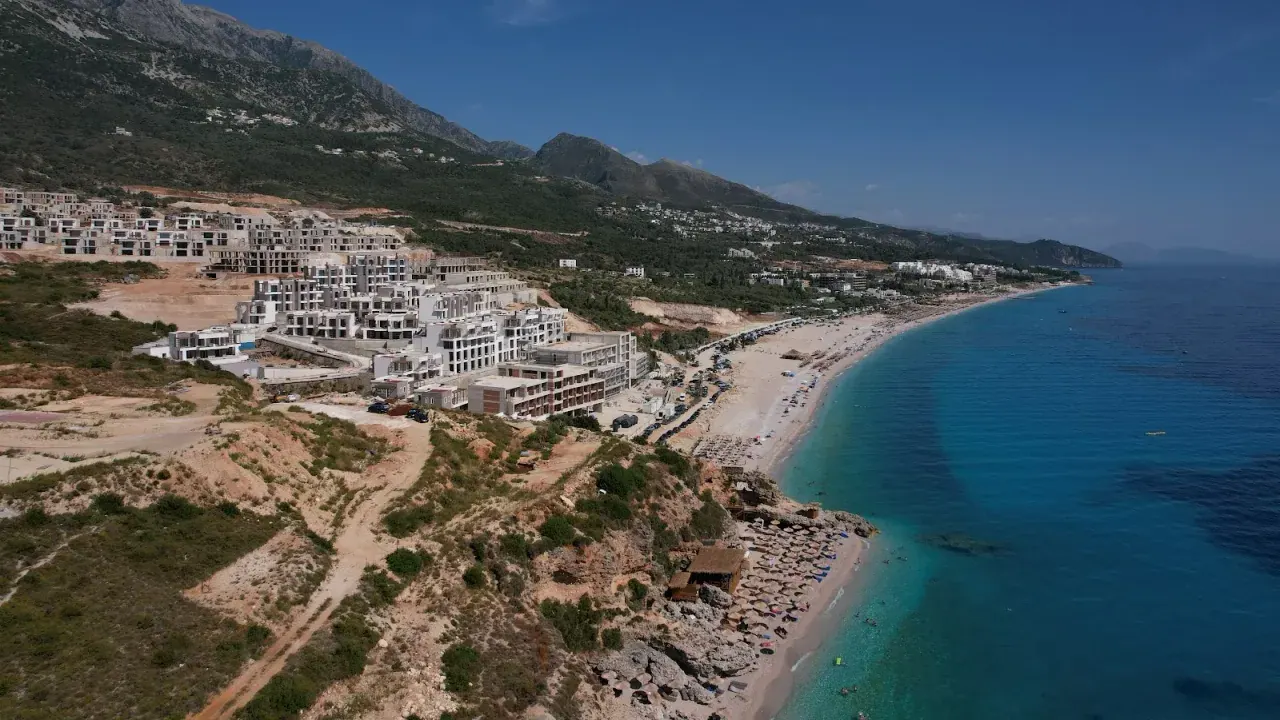
Development has crept in. There are hotels along this stretch with private sun-lounger sections, plus beach bars and a few restaurants, but it remains low-key compared with the Dhërmi clubs. There's still plenty of unclaimed beach where you can simply lay a towel for free.
What it costs
Palasa runs on cash in lek like the rest of the coast; ATMs are back in the villages, so bring notes. Rough guide prices (~95 lek ≈ €1):
| Item | Typical cost | Notes |
|---|---|---|
| Two sunbeds + umbrella | ~1,000–2,000 lek (€10–20) | Higher at the smarter hotel sections |
| Free option | 0 lek | Long stretches of open pebble, bring a towel |
| Coffee / soft drink | ~150–300 lek (€1.50–3) | |
| Lunch for two | ~2,000–4,000 lek (€20–40) | Beach bars and restaurants |
Because Palasa is quieter, you can genuinely have a near-free beach day here, park, walk to an open patch, and buy nothing but a coffee. Bring your own shade if you want to guarantee it on a busy weekend.
How to get to Palasa Beach
Palasa is the first beach on the Riviera once the SH8 drops off the Llogara Pass, reached by a signed access road down to the shore. It's about 2–3 km north of Dhërmi.
- By car or scooter (best). Easiest by far. A relatively new access road takes you from the main road down to the beach and its parking. From Dhërmi it's only a few minutes. See renting a car for the Riviera.
- From Tirana. Roughly a 3–3.5 hour drive, or seasonal coach services (RivieraBus and similar) run down the coast, useful if you're arriving without a car. See getting to Dhërmi.
- By bus/furgon. Summer coast buses and furgons pass on the SH8 and can drop you near the turn-off, leaving a walk down to the sand; there's no dedicated beach shuttle. Car-free? Read Dhërmi without a car.
Eating, staying and facilities
Palasa has developed faster than its quiet reputation suggests, and the flat coastal plain behind the beach now holds a scatter of hotels, villas and beach-club resorts, including some of the more upmarket addresses on this part of the Riviera, with private lounger sections running down to the water. That makes Palasa a genuine option for basing yourself if you value calm over nightlife: you're a short drive from the Dhërmi and Drymades clubs when you want them, but you sleep somewhere far quieter. It books up for peak summer, so reserve early; the hotels section and our where to stay in Dhërmi guide cover the choices.
For food, the beach bars and a handful of restaurants along the shore handle lunch, grilled fish, salads and cold drinks, with a meal for two around 2,000–4,000 lek (€20–40). It's low-key rather than a dining destination; for a bigger spread head into Dhërmi (see where to eat). Facilities are otherwise minimal: there's parking and the lounger sections, but no ATM on the beach, so bring cash, and pack your own shade and water shoes as you would anywhere on this pebbled coast.
Palasa and the Green Coast
Palasa is also the site of the Riviera's most ambitious tourism development, the upmarket Green Coast project spread across the plain behind the beach. A cluster of resort hotels, branded residences, pools and beach clubs that has grown fast over recent years. It's a different Albania from the backpacker campgrounds down at Jale: polished, pricier, and aimed at travellers who want a resort experience with the mountains as a backdrop. Opinions divide on it, some love the facilities, others feel it sits at odds with the wild coast, but it's worth knowing about, because it shapes what Palasa offers. If you want loungers, poolside service and organised beach clubs, this end delivers; if you want the free, empty pebble, simply walk along the beach away from the developed sections, where the long open stretches remain. Either way, book well ahead in peak summer, as the resort rooms fill early.
When to go
Palasa's swimming season is June to September, and its quiet character makes the shoulder months especially rewarding: late June and September keep the water warm while the plain stays empty. Even in peak August, Palasa's length absorbs crowds far better than the smaller party coves, so it's a smart choice for a calm day when the rest of the coast is heaving. Mornings are stillest; afternoons bring a light breeze. For the month-by-month rundown, see the best time to visit Dhërmi.
Frequently Asked Questions
Is Palasa Beach better than Dhërmi Beach?
For quiet and space, yes; for atmosphere, no. Palasa is longer, calmer and less developed, with water often rated even clearer than its neighbours. Dhërmi and Drymades have the beach clubs, boats and nightlife. Many visitors base in Dhërmi and come to Palasa for a slower, less crowded beach day.
Is Palasa really a Blue Flag beach?
Palasa is widely reported as Albania's first beach to earn Blue Flag certification, an international award for water quality, safety and beach management. The Blue Flag list is reviewed each season, so treat it as a strong signal of Palasa's clean water rather than a permanent guarantee, and enjoy the beach on its own merits.
How do you get to Palasa Beach from Dhërmi?
Drive or scooter a few minutes north on the SH8, Palasa is the first beach below the Llogara descent, and take the signed access road down to the shore and its parking. Seasonal coast buses and furgons pass nearby but leave a walk to the sand; a car or scooter is much easier.
How much do sunbeds cost at Palasa?
Around 1,000–2,000 lek (€10–20) for two loungers and an umbrella, more at the smarter hotel sections, paid in cash. Because the beach is long and quiet, you can also find open pebble to lay a towel for free. Bring your own shade if the day looks busy.
Is Palasa Beach sandy?
No. It's a white-pebble beach, which is what keeps the water so clear. The stones are smooth but firm underfoot, so water shoes help getting in and out of the sea, and a mat under a towel is worth having if you're not renting a sunbed.