For decades the Ionian belonged, in most travellers' minds, to Greece, Corfu, Lefkada, the postcard blues. Then the coast on the other side of the strait opened up, and the Albanian Riviera vs Greek islands debate became one of the most useful questions in Mediterranean travel. The short version is that they share the same sea and much of the same beauty at very different prices, but the full answer, and whether you should even choose, is more interesting. Here's how the coast around Dhërmi stacks up against its famous neighbour.
Albanian Riviera vs Greek islands: the headline numbers
| Albanian Riviera | Greek islands (e.g. Corfu) | |
|---|---|---|
| Water & beaches | Same Ionian blues; pebble coves, clear water | Same sea; more sandy resorts, more developed |
| Overall cost | The value story of the Ionian | Roughly 40–60% pricier across the board |
| Beach amenities | Sunbeds, tours far cheaper | Established, polished, costlier |
| Crowds | Busy by Albanian standards, still emptier | Long-established mass tourism |
| Infrastructure | Newer, patchier, car-first | Mature, airports, ferries, resorts |
| Nightlife | Strong beach-club scene at Dhërmi | Varies by island; Corfu well developed |
The pattern that comes up again and again: the Albanian Riviera offers comparable water and scenery for markedly less money, while the Greek islands offer more polish, more sand and more mature infrastructure. How you value those against each other decides where you'd rather be, and, happily, a 30-minute ferry means you don't strictly have to.
The water is genuinely comparable
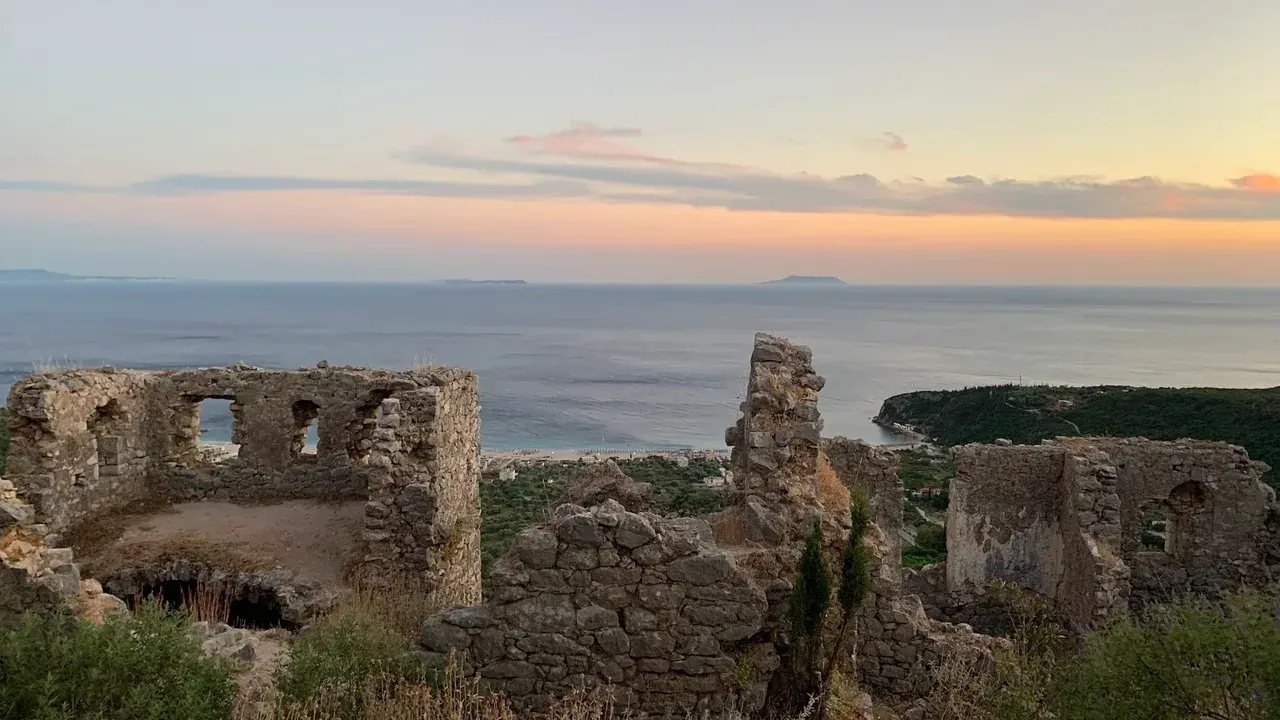
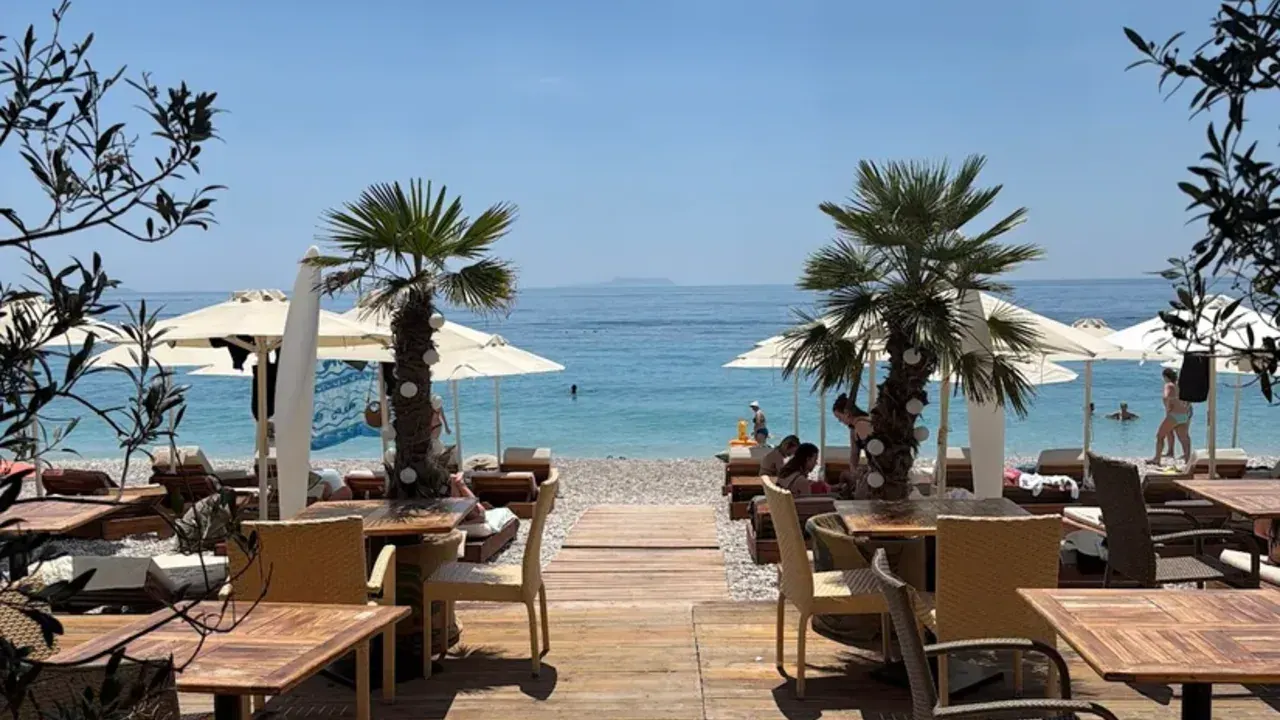
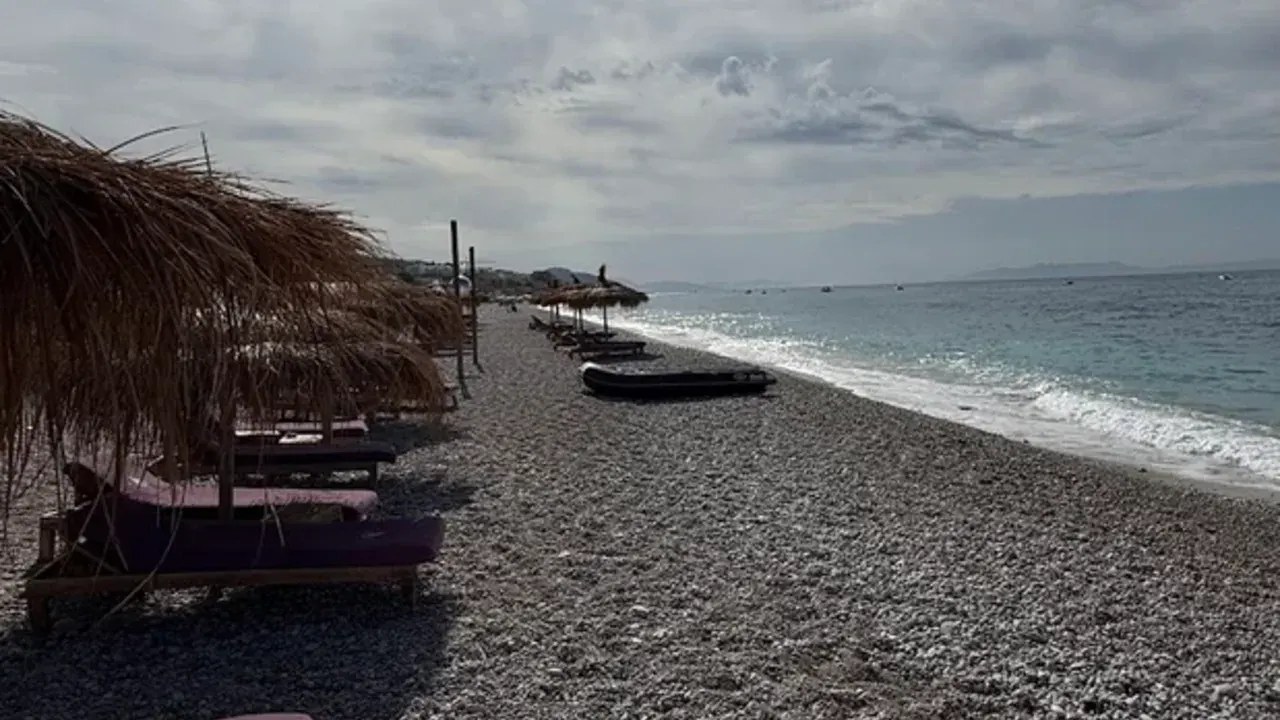
Let's dispel the biggest myth first: the Albanian coast is not a downgrade on scenery. The Ionian runs the same range of turquoise and deep blue on both shores, and because mass-tourism development arrived later here, the water clarity around the Riviera is arguably as good as or better than comparable Greek beaches. The difference is texture and setting: Albania's Riviera leans to dramatic pebble coves below steep mountains (Gjipe, Dhërmi, Drymades), while Corfu and the Greek islands offer more sandy, resort-backed bays. If your dream beach is soft sand with a sunbed and a taverna, Greece has more of it; if it's clear water in a wild cove, Albania is hard to beat.
The cost gap is real
This is where the Riviera wins outright. Broadly, Albania runs 40–60% cheaper than the Greek islands across most categories, and beach amenities, sunbeds, umbrellas, boat trips, can be 70–90% cheaper. A few concrete 2026 comparisons:
| Item | Albanian Riviera | Corfu / Greek islands |
|---|---|---|
| Dinner for two with wine | ~€40–70 | ~€70–110 |
| Beach-bar coffee | ~1–1.50 (100–150 lek) | ~€3.50–5 |
| Beer at a beach bar | ~€2–4 (200–400 lek) | ~€5–8 |
| Cocktail | ~€5–8 (500–800 lek) | ~€10–16 |
| Peak-August villa (4-bed) | ~€600–900 / night | ~€1,400–2,000 / night |
Over a two-week trip for two, that gap typically adds up to a saving of €1,500–2,500. One caveat worth stating plainly: Dhërmi's sunbeds are the priciest on the Albanian Riviera, so the single biggest "expensive" line you'll hit here is still cheap by Greek-island standards. Remember too that Albania is cash-in-lek country on the beach (~95 lek ≈ €1), and not in the EU or Eurozone, so factor in connectivity and money logistics.
Crowds, infrastructure and the catch
There's a historical reason the two coasts feel so different. Under Enver Hoxha's communist regime, Albania was one of the most isolated countries on earth, sealed off and effectively closed to foreign tourists until the system collapsed in 1991, so the Riviera's tourism is barely two decades old, where Greece has drawn visitors for generations. That head start explains most of the gap that follows.
The Riviera's relative emptiness is a real draw, even Himarë or Dhërmi in August is busier by Albanian standards but still emptier than a Greek island in June, and you can usually find a restaurant table or a parking spot without a battle. The honest trade-offs: Albania's infrastructure is newer and patchier, it's a firmly car-first coast with no train and limited buses, and roads like the SH8 demand care. Greece's islands are more mature, more flights, more ferries, more turnkey resorts, which some travellers happily pay the premium for.
Why not both?
Here's the point most comparisons miss: you don't have to choose. The Corfu–Sarandë ferry takes about 30 minutes, so you can very reasonably combine a Greek island with the Albanian Riviera in one trip, a few days of Corfu's sand and infrastructure, a few days of Dhërmi's coves and value. Just remember the border rule: Greek and Corfu rental cars almost never allow entry to Albania, so cross as a foot passenger and rent a car in Sarandë on the Albanian side.
Getting there: and the border catch
Access is one place Greece still leads. Corfu has its own international airport with dense summer flights; the Albanian Riviera is served overland from Tirana airport, a 3 to 3.5-hour drive to Dhërmi over (or under) the Llogara Pass. There's no train and only limited buses on the Albanian side, so it's a car-first coast, factor in renting a car or the slower option of doing Dhërmi without one.
The border rule is the trap that catches combined trips. Albania sits outside the EU, Schengen and the Eurozone, so an EU passport still faces a border check, EU roaming bundles stop working (a data eSIM keeps maps alive), and, crucially, Greek and Corfu hire cars almost never allow crossing into Albania. Cross the strait as a foot passenger and pick up a separate car in Sarandë. It's a minor hassle that trips up first-timers, and worth planning around rather than discovering at the ferry gate.
Which Greek islands, specifically
"The Greek islands" is a broad brush, and the comparison shifts depending on which one you mean. Corfu is the direct rival, the same Ionian, a 30-minute ferry from Sarandë, greener and more developed, with mass-tourism polish and its own airport, so it's the natural pairing with a Dhërmi trip. Lefkada and Kefalonia, further south, bring some of Greece's most famous beaches (Porto Katsiki, Myrtos) but cost more to reach and more to stay. Against any of them, the Albanian Riviera's pitch holds: comparable or clearer water, dramatic mountain-backed coves, and prices a third to a half lower. The Greek islands counter with softer sand, longer-established food and hotel scenes, and easier logistics. If you're deciding between Corfu and Dhërmi for the same fortnight, the short ferry makes "both" the smart answer; if you're weighing Dhërmi against a harder-to-reach Greek island, Albania wins on value and access alike.
The verdict
If you want the best value for genuinely beautiful water, fewer crowds and a strong beach-club scene, the Albanian Riviera, with Dhërmi as its best base, wins. If you want more sand, more polish and turnkey infrastructure, the Greek islands justify their premium. For most travellers weighing the two in 2026, the smartest play is to lean Albanian for the beaches and budget, and bolt on a slice of Corfu across that short strait. See is Dhërmi worth visiting and the best time to visit to lock in the details.
Frequently Asked Questions
Is the Albanian Riviera cheaper than the Greek islands?
Yes, substantially. The Albanian Riviera runs roughly 40–60% cheaper than the Greek islands across most categories, and beach amenities like sunbeds and boat trips can be 70–90% cheaper. Over a two-week trip for two, the saving often totals €1,500–2,500, even though Dhërmi has the Riviera's priciest sunbeds.
Are Albanian Riviera beaches as good as Greek ones?
The water is genuinely comparable, the same Ionian blues, with clarity arguably as good or better because development came later. The difference is texture: Albania leans to dramatic pebble coves below mountains, while Greece offers more sandy, resort-backed bays. For wild clear coves, Albania excels; for soft sand, Greece has more of it.
Can I visit both Albania and Greece in one trip?
Easily. The ferry from Corfu to Sarandë takes about 30 minutes, so combining a Greek island with the Albanian Riviera is straightforward. Note that Greek and Corfu rental cars almost never allow crossing into Albania, so travel as a foot passenger and rent a separate car on the Albanian side in Sarandë.
Is the Albanian Riviera less crowded than Greece?
Generally yes. Even in peak August, busy Albanian Riviera spots like Dhërmi and Himarë tend to feel emptier than a Greek island in June. You can usually find a restaurant table or parking without much trouble. The trade-off is patchier, newer infrastructure and a car-first coast with limited public transport.
Should I choose Dhërmi or Corfu for a beach holiday?
For value, clear coves and nightlife, choose Dhërmi; for sandy resorts, polish and mature infrastructure, choose Corfu. Because the ferry between them is only about 30 minutes, the best answer for many travellers is both, basing on the Albanian Riviera for the beaches and budget, then adding a short Corfu stay.