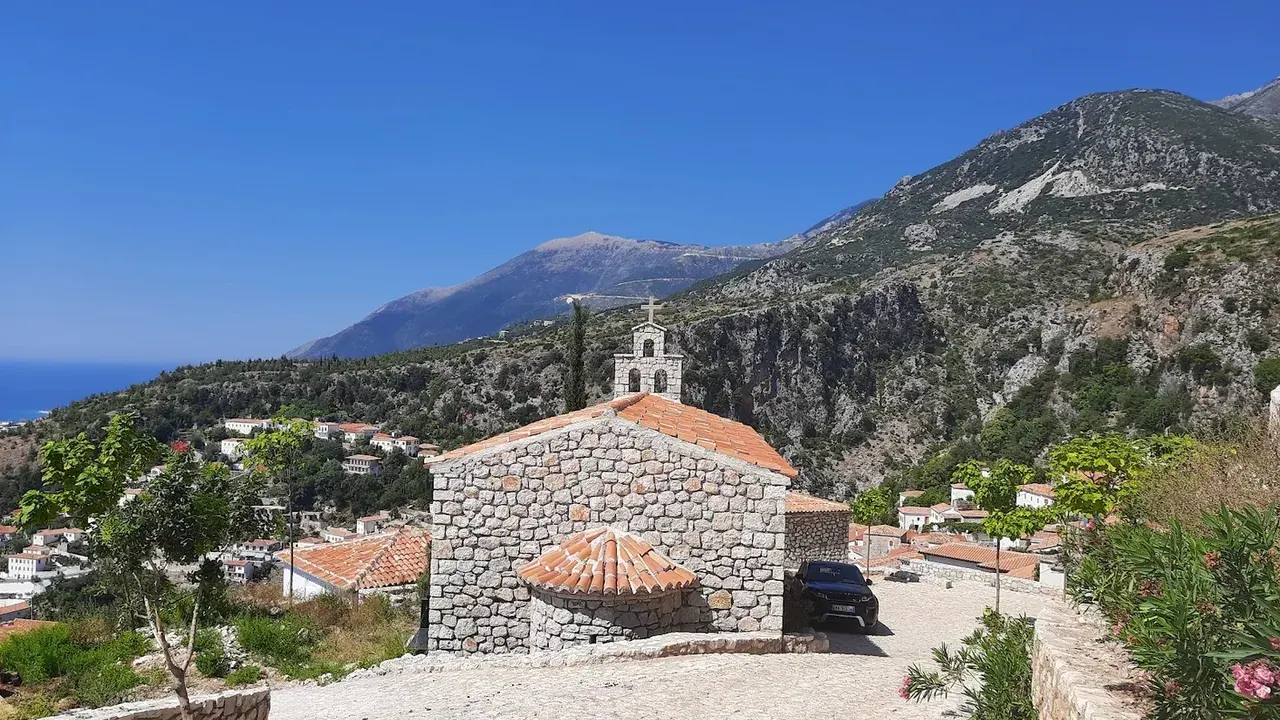
Albania is far safer than its outdated reputation suggests, and Dhërmi, a quiet beach village on a booming tourist coast, is safer still. Violent crime is rare, locals are famously hospitable to visitors, and the real hazards of an Albanian Riviera trip are practical ones: the winding coast road, the summer sun, the stray dogs, and an economy that still runs largely on cash. Travelling by yourself changes little of this. See solo travel in Dhërmi. Come prepared for those and it's a wonderfully easy, welcoming place to travel.
The short answer
Yes, Dhërmi and the Albanian Riviera are safe to visit in 2026. The thing most likely to catch you out is the drive, not the people. Here's how the genuine risks actually rank.
| Risk | How real | What to do |
|---|---|---|
| The SH8 coast road | The #1 real hazard | Drive defensively, slow for bends, avoid night mountain driving |
| Sun & heat | High Jun–Sep | Water, shade, hat, midday breaks |
| Sea (few lifeguards, coves) | Moderate | Swim within your depth; take care off boats |
| Cash-only economy | An inconvenience, not a danger | Carry enough lek; ATMs thin out south |
| Crime | Very low | Normal precautions in crowds |
Crime: low, and the old reputation is long gone
Albania consistently records low levels of violent crime, and along the tourist-driven Riviera serious crime against visitors is rare. What little exists is opportunistic petty theft in busy summer spots. Keep your valuables secure on packed beaches and in nightlife crowds and you'll almost certainly have no trouble. Albanian hospitality toward guests is a genuine cultural cornerstone, and most travellers are struck by how welcome and unbothered they feel.
The "is Albania dangerous?" question is a hangover from the 1990s, specifically the unrest that followed the 1997 collapse of the country's pyramid savings schemes. That was nearly thirty years ago. Today's Albania is a stable NATO member (since 2009) and EU candidate whose southern coast is one of the Mediterranean's fastest-growing holiday regions, with new hotels, beach clubs and direct ferries from Corfu. Solo and female travellers generally find it comfortable and easy.
The real risk: the road
If the Albanian Riviera has a genuine danger, it is driving the SH8 coast road. The scenery is the reason to come, but the road that delivers it is narrow, steep and serpentine, climbing over the Llogara Pass and threading cliffs above the sea. Add occasional potholes, wandering livestock, and a local driving style that overtakes with confidence, and you have the one thing worth real respect.
None of it should put you off, thousands drive it happily every summer, but drive defensively: slow right down for blind bends, keep your distance, use the modern tunnels in poor weather, and avoid the mountain sections after dark. If you'd rather not drive at all, the coast is served by furgons (shared minibuses) and taxis, and many arrive car-free via the Corfu ferry and rent locally. See our Albanian Riviera car rental guide for the full picture.
Sun, sea and cash
The everyday practicalities worth planning around:
- The sun. June to September is strong; carry water, wear sunscreen and a hat, and take shade at midday.
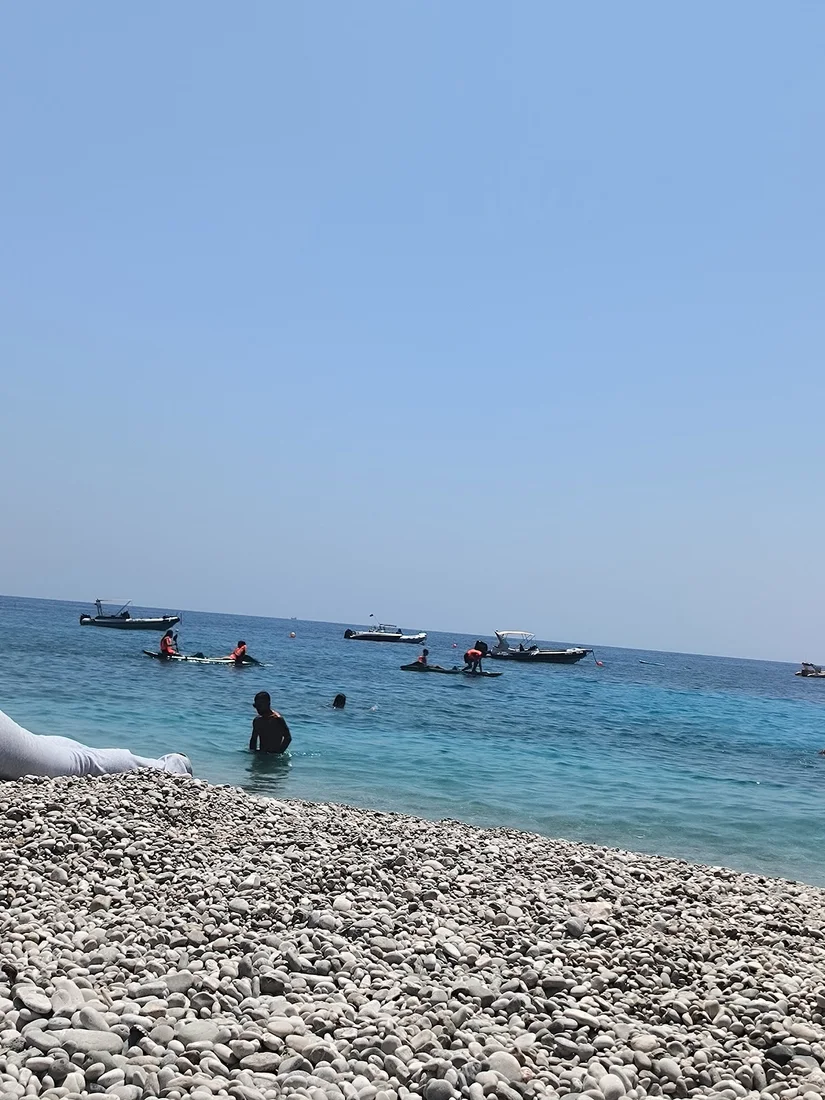
- The sea. Dhërmi's water is clear and calm on most days, but beaches have few or no lifeguards, so swim within your depth. Take normal care on boat trips to the coves and the Pirates' Cave, and mind slippery rocks.
- Cash is king. Albania runs largely on lek in cash, sunbeds, small tavernas, furgons, parking and fuel at minor stations often won't take cards, and ATMs thin out as you go south. Draw enough before you leave the towns.
- Water. Drink bottled or filtered water; tap water is best treated as non-potable. Our guide to drinking the tap water in Dhërmi explains why bottled is the local norm and what the tap is fine for.
Emergency numbers
- 112. The general emergency number works in Albania (as across Europe).
- 129, police · 127, ambulance · 128, fire.
- Travel insurance is strongly recommended, particularly if you plan to drive or take boat trips.
For whether the village itself is your kind of place, see is Dhërmi worth visiting; to time the trip well, see the best time to visit Dhërmi.
Frequently Asked Questions
Is Albania safe for tourists in 2026?
Yes, Albania is one of the safer countries in Europe for travellers, with low rates of violent crime and a strong culture of hospitality toward guests. Its dangerous 1990s reputation, from the unrest that followed the 1997 collapse of national pyramid schemes, is nearly three decades out of date: Albania joined NATO in 2009, is an EU candidate, and its coast is now one of the Mediterranean's fastest-growing tourism regions.
Is Dhërmi safe for solo and female travellers?
Yes. Solo and female travellers generally report feeling very comfortable in Dhërmi and along the Albanian Riviera, including in the evenings in the villages and beach areas. Local hospitality is genuine and unwanted attention is uncommon. Take the usual sensible precautions, especially getting home safely late at night, and you'll almost certainly have an easy, welcoming trip.
Is it safe to drive the Albanian Riviera coast road?
It's the single thing to take seriously. The SH8 coast road is spectacular but winding, steep and mountainous, especially over the Llogara Pass, with the odd pothole, livestock, and locals who overtake boldly. Drive defensively, slow right down for blind bends, avoid night driving on the mountain sections, and you'll be fine. It is the roads, not crime, that are the real risk here.
Can you drink the tap water in Dhërmi?
Treat tap water as non-potable and drink bottled or filtered water, which every shop sells cheaply for a few dozen lek. Tap water is generally fine for brushing teeth and showering, but supply can be intermittent in peak season in some smaller guesthouses, so it's worth keeping a bottle handy.